
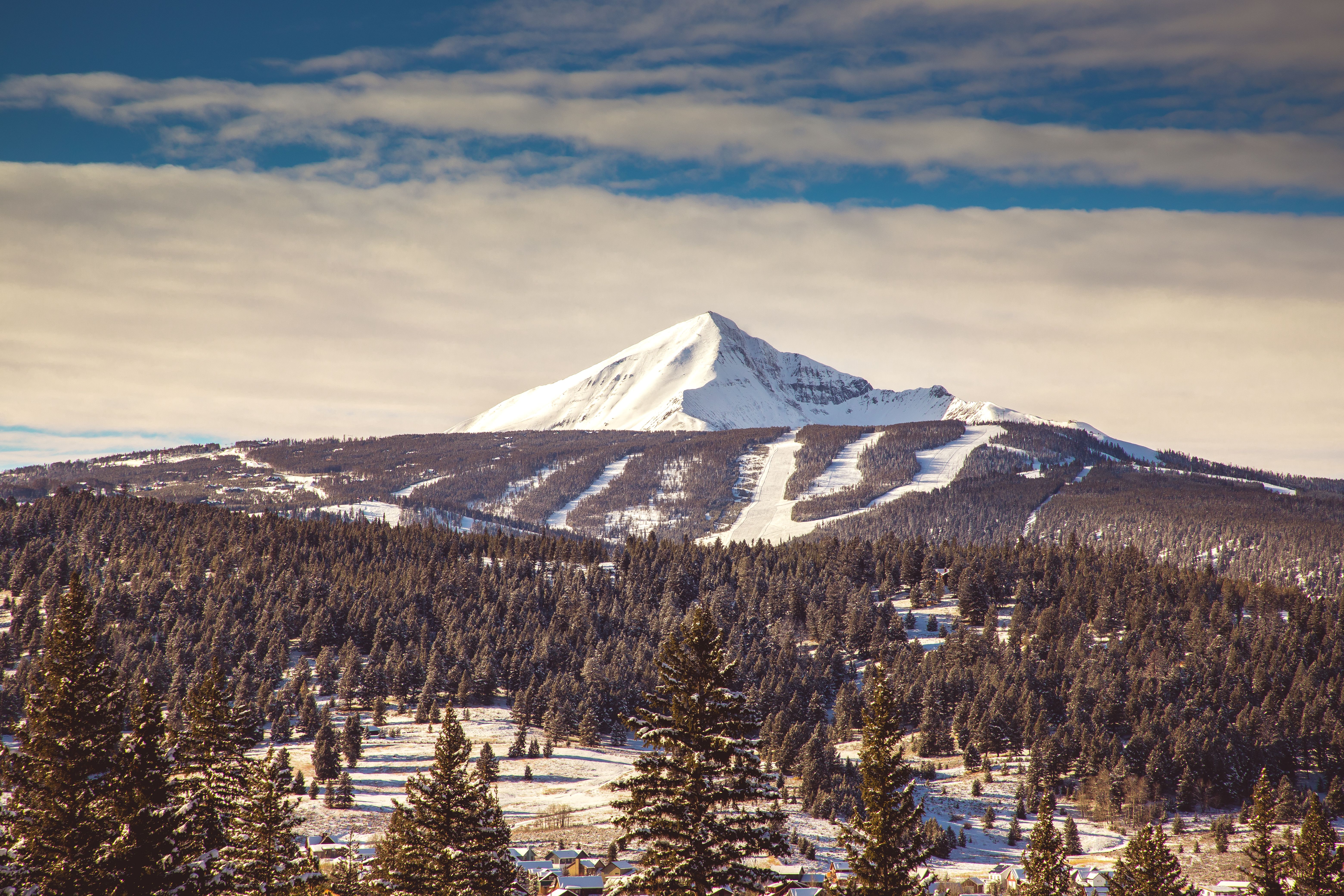
A condo in Big Sky can cost more per square foot than a single-family home in Bozeman, and those two markets sit 45 miles apart on the same road.
Most people look at that and figure Big Sky is the expensive version of Bozeman with a ski hill bolted on and a premium sitting on top. The reason it costs what it costs has very little to do with skiing, and the views aren't really it either. It comes down to what Big Sky is on paper, which is not a town the way Bozeman is a town. Once you see that difference, the whole decision gets easier.
There's also one line item up there that has ended more of my deals than the price ever has, and most buyers don't see it coming until they're a couple of weeks from closing.
Rather listen than read? I walk through both towns on camera: Big Sky vs Bozeman.
The short version
Big Sky is unincorporated and spans two counties, so there's no city with the authority to annex land or extend water and sewer, which caps how much can ever be built.
Condo dues plus club fees are permanent monthly numbers that never show up in a price per square foot comparison, and lender review of the building is what actually kills Big Sky deals.
Big Sky requires no local short-term rental permit while Bozeman stopped issuing them years ago, which is the sharpest difference between the two markets.
Should you buy in Big Sky or Bozeman?
Buy in Bozeman if the property is your full-time home, because the city does more of the everyday work in every month of the year rather than only the ones with snow. Choose Big Sky if the mountain is the reason you're coming and the property needs to earn income while you're away, since short-term rental rules there still allow it and Bozeman's do not. For a part-time retreat, the nights you'll actually use it is the number that settles it.
Big Sky isn't a town, and that sets the price
Start with what Big Sky is structurally, because that's what prices everything up there. Big Sky is unincorporated. No mayor, no city council, no city limits, no city planning department deciding where the next neighborhood goes.
It also straddles two counties, Gallatin on one side and Madison on the other. A home three miles from another home can answer to a different county and a different tax base, and that split runs deeper than most buyers realize. School and hospital district boundaries follow the county line too.
What runs the place instead is a network of districts, each with its own board and its own boundary drawn on a map. The Big Sky Resort Area District collects a 4% resort tax on luxury goods and services and turns that money back into infrastructure and emergency services. Separate districts handle water and sewer and fire protection.
Why the districts cap what can be built
None of that works the way annexation works down in Bozeman. Bozeman is boxed in by mountains and county ground, and the city can still plan, annex land, and run water and sewer out to new ground on a public timetable you can go look up.
Up in Big Sky, new housing happens where a developer can tie into a water and sewer district that has a hard boundary and a real capacity limit. No city exists with the authority to vote that boundary bigger. Put that on top of the terrain, a canyon and a mountain rather than a valley floor, and the ground anybody can build on is a fraction of what the Bozeman side has.
That's what you're paying for, and it shows up first in what kind of property you end up owning. In Bozeman a condo is one option among many. You can find a house on a lot at most price points if you're willing to drive a little. At the entry end of Big Sky, a condo is the only way in, and it's a genuine product up there rather than a consolation.
Some of that number is the mountain, obviously, because the skiing is wonderful. The bigger piece is a supply problem nobody has the authority to fix, and a constraint like that holds prices through a soft market far better than a view ever does.
What a normal week looks like up there
All of that shows up in your day-to-day life more than it shows up on your closing statement. For groceries and everyday things, the markets in Big Sky cover you fine, even if they're limited. Anything big box, anything specialty, or a real stock-up run means coming down the canyon into Bozeman. Dining runs the same way, since Big Sky has some genuinely good restaurants in Town Center and the Meadow Village, and the number of them is small next to what downtown Bozeman runs every day.
Here's the piece people never think about until they've lived a year up there. A resort town runs on seasons. Big Sky has a shoulder season roughly April into May, and again in October and November, where the lifts are down, a lot of places close, staff leaves for a few weeks, and the town gets very quiet. Bozeman has a little of that and not nearly as much, because a university, a hospital, and a year-round job base don't take April off.
Healthcare, which surprises people in a good direction
Big Sky has its own hospital. It's a small critical access facility with a 24-hour emergency department and a helipad on site, handling emergencies and primary care right in Town Center, and it opened at the end of 2015.
Anything specialized or major still comes back down to Bozeman, because that's where the trauma center and the specialists are.
The canyon drive, and whose drive it really is
How bad is that drive? It's about 45 miles of highway running up a canyon along a river, and in decent conditions you're looking at an hour or so. In winter you're driving a mountain canyon in the dark with wildlife on the road and weather that can change halfway through. Cell coverage drops out in stretches. The road closes occasionally for a wreck or a slide.
That drive isn't only yours, though. It's your plumber's drive, your appliance delivery, your window guy, and every service call you'll ever make, which is why routine work up there costs more and takes longer than the same work in Bozeman.
None of that is a reason to stay out of Big Sky. I want you to know what your week will look like before you buy into it, because the clients I've watched struggle up there did all their math on the house and none of it on what a week would really cost them.
The line item that ends deals
Two pieces here, and both are money that never shows up in a price per square foot comparison.
The first is what you owe every month. Condo dues in Big Sky can run well past what people expect coming from a Bozeman HOA, and in some communities there's an amenity or club structure layered on top of the association itself. That's a real monthly number, it's permanent, and it belongs in your math before you fall in love with anything.
Then comes the one that actually kills deals, which is the financing. A condo building running heavy short-term rental use can fall outside conventional lending guidelines, and when that happens your loan options narrow fast. You're looking at a bigger down payment, a portfolio loan, a higher rate, or a lender walking away late in the process.
Why doesn't that surface until you're already under contract? Because it's the lender's review of the building rather than a review of you, and that review usually doesn't start until you're under contract and already spending money on the deal. So ask about it before you write the offer. That one question has saved my clients more headaches in Big Sky than just about anything else.
What job does this property have to do?
Let me stop describing these two places and put them against your situation, because most people ask the wrong question first. Everybody wants to know which town is better. The question I'd ask instead is what job this property has to do for you, and there are basically three answers, each pointing a different direction.
Is it your full-time home? Bozeman does more of the everyday work, and it does it in January and April and every month that isn't ski season.
Or is it a place you use some number of weeks a year? Then the number that settles it is nights per year, because 15 nights makes that canyon drive and those dues a very different calculation than 100 nights does.
Does it have to earn while you're gone? That's where the two point in completely opposite directions, and it's the next section.
Short-term rentals: the sharpest difference between the two
Big Sky doesn't require a local short-term rental permit. You need a Montana public accommodation license from the state, and you register to remit lodging taxes, which run about 12% all in, 8% state and 4% resort tax, on stays under 30 days.
The city of Bozeman stopped issuing new licenses years ago for full-time short-term rentals you don't live in. So if income is part of the job this property has to do, that's a real difference between these two markets, and it's about as cut and dry as anything in this comparison.
You still have to verify the covenants on every specific building you look at, because an association can be stricter than the county. Both places have changed their rules before and will probably change them again, so confirm the current ones on the exact property rather than relying on this page.
The clients who stopped choosing between the two
This is the question my clients ended up answering for themselves. They moved to the area for the skiing and the recreation, went straight to Big Sky, and bought a condo. For about four years it was an amazing call. They used the place constantly, loved it, got real value out of it, and it did everything they wanted.
Then what they wanted out of a week started to change, and the things that made Big Sky work for them stopped being what they were building their life around. So we started looking at homes in Bozeman and talked through selling the condo.
Here's the part worth hearing. They didn't have to pick. Keeping the Big Sky condo, they turned it into a short-term rental, and it earned well through a stretch when they weren't using it at all. The property took on a second meaning. We did eventually sell it once they knew what their plans really looked like, and it had worked both ways, as a place they lived in and as something that paid them back.
A place in Big Sky can take on a second job when your life changes, and that flexibility is worth real money in a way a price per square foot comparison will never show you.
Which side of the canyon fits your life
So where does this leave you? Say your week runs on work and errands and appointments, and you want that week to be short. Bozeman does more for you there, every day of the year rather than the ones with snow on the ground.
Maybe the mountain is the whole reason you're coming out here, and you want the home to earn something during the weeks you're not in it. Big Sky is built for exactly that, and the rules up there still allow it.
If you can't tell yet which of those two people you are, rent through one full winter and one full shoulder season before committing to either side of the canyon. Most of what a home out here earns you gets decided the day you pick the town, and these two answer to completely different sets of rules.
I work with busy professionals who want both halves of this to work, the money side and the life on the other side of the move, which is what the Montana Move Method is built around. Before you write an offer on either side, see what one budget buys across seven towns in this valley, including the stop where the money doesn't buy a house at all.
Prefer to watch?
Here's the full comparison on camera.
If the video doesn't load, you can watch it here on YouTube.
Big Sky vs Bozeman: quick answers
Is Big Sky part of Bozeman?
Big Sky is a separate unincorporated community about 45 miles southwest of Bozeman by road, spanning both Gallatin and Madison counties. It has no mayor, city council, or city limits, and is run instead by a network of special districts with their own boards and boundaries.
Why is Big Sky real estate so expensive?
Big Sky's price comes mostly from a supply limit nobody can vote bigger, since no city exists to annex land or extend water and sewer past the district's hard boundary and capacity. Add canyon and mountain terrain and the buildable ground is a fraction of what the Bozeman side has.
What is the Big Sky resort tax?
The Big Sky Resort Area District collects a 4% resort tax on luxury goods and services, including restaurants, short-term lodging, and retail, and reinvests it in infrastructure and emergency services. Necessities such as unprepared food and medicine are exempt.
Can you short-term rental a property in Big Sky, Montana?
Big Sky requires no local short-term rental permit, though operators need a Montana public accommodation license and must register to remit roughly 12% in lodging taxes, 8% state and 4% resort, on stays under 30 days. Bozeman stopped issuing new licenses years ago for short-term rentals the owner doesn't live in.
Why do Big Sky condo deals fall apart?
A Big Sky condo building with heavy short-term rental use can fall outside conventional lending guidelines, which narrows loan options to a larger down payment, a portfolio loan, a higher rate, or no loan at all. The lender reviews the building rather than the borrower, and that review usually starts only after you're under contract.
How long is the drive from Bozeman to Big Sky?
The drive runs about 45 miles up Gallatin Canyon and takes roughly an hour in good conditions. Winter means a mountain canyon in the dark with wildlife, changing weather, patchy cell coverage, and occasional closures for wrecks or slides.
Does Big Sky have a hospital?
Big Sky has a small critical access hospital in Town Center with a 24-hour emergency department and a helipad, which opened at the end of 2015. Specialized and major care still goes to Bozeman, where the trauma center and specialists are.
What is shoulder season in Big Sky?
Shoulder season in Big Sky runs roughly April into May and again in October and November, when the lifts are down, many businesses close, and seasonal staff leave. Bozeman experiences far less of this, because the university, the hospital, and a year-round job base don't shut down.
Which side are you leaning toward?
Tell me what the property has to do for you and I can usually answer this in one conversation. Book a call with me with your nights per year, whether it needs to earn, and what a normal week looks like for you.
Keep reading
Posted by Chase Heiland onEnjoy this blog post? Click here to subscribe for updates
Leave A Comment