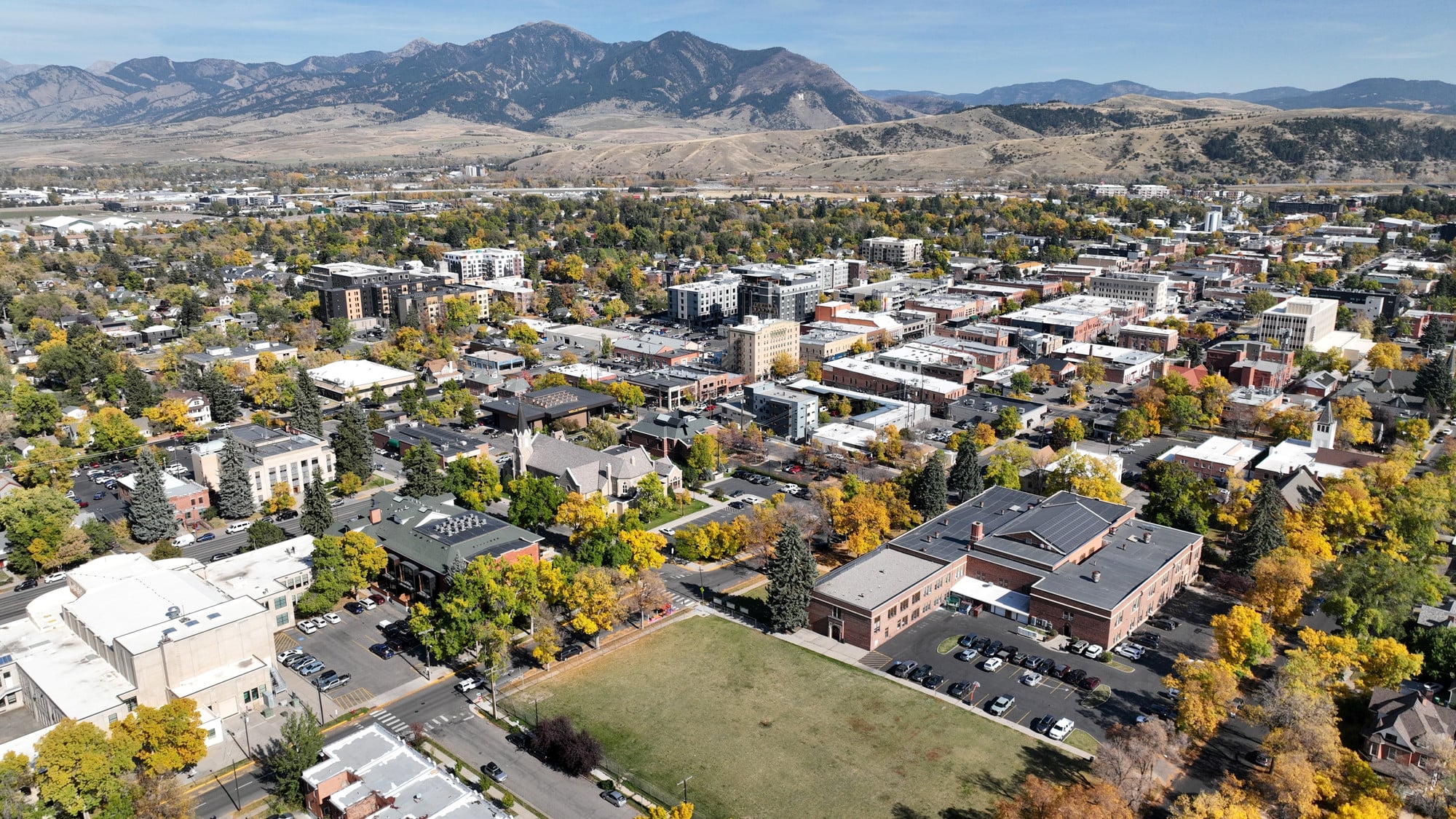
A lot of people don’t realize that Bozeman’s city limits are still moving, and a couple of the newest neighborhoods people tour every weekend sit just outside them right now. This valley gets confusing fast, because every part of it feels like its own small town and the price, the pace, and the reason people land there change from one area to the next.
Below are the five areas I’d actually consider if I were moving here today, each built for a different kind of person. At the end I’ll tell you where I picked for myself and what I weighted to get there.
Rather listen than read? I walk all five on camera: If I Were Moving to Bozeman in 2026, I’d Move Here.
The short version
Downtown carries the highest price per square foot in the valley and the smallest lots, and it buys you a resale market that stays liquid when the rest slows.
Several of the newest subdivisions sit outside city limits, which changes your water, your services, and sometimes your taxes.
Most people relocating shop for the newest house they can afford, when an older home in a proven neighborhood often produces the better outcome.
Which part of Bozeman should you move to?
Downtown and Midtown suit buyers who want Main Street on foot and will pay per square foot for it. New construction requires settling which side of the city limits your house sits on. The west side offers parks, schools, and a short trip to everything in a part of town still being finished, the established south side has already proved itself, and the canyons give you land and quiet paid for in drive time.
Downtown and Midtown
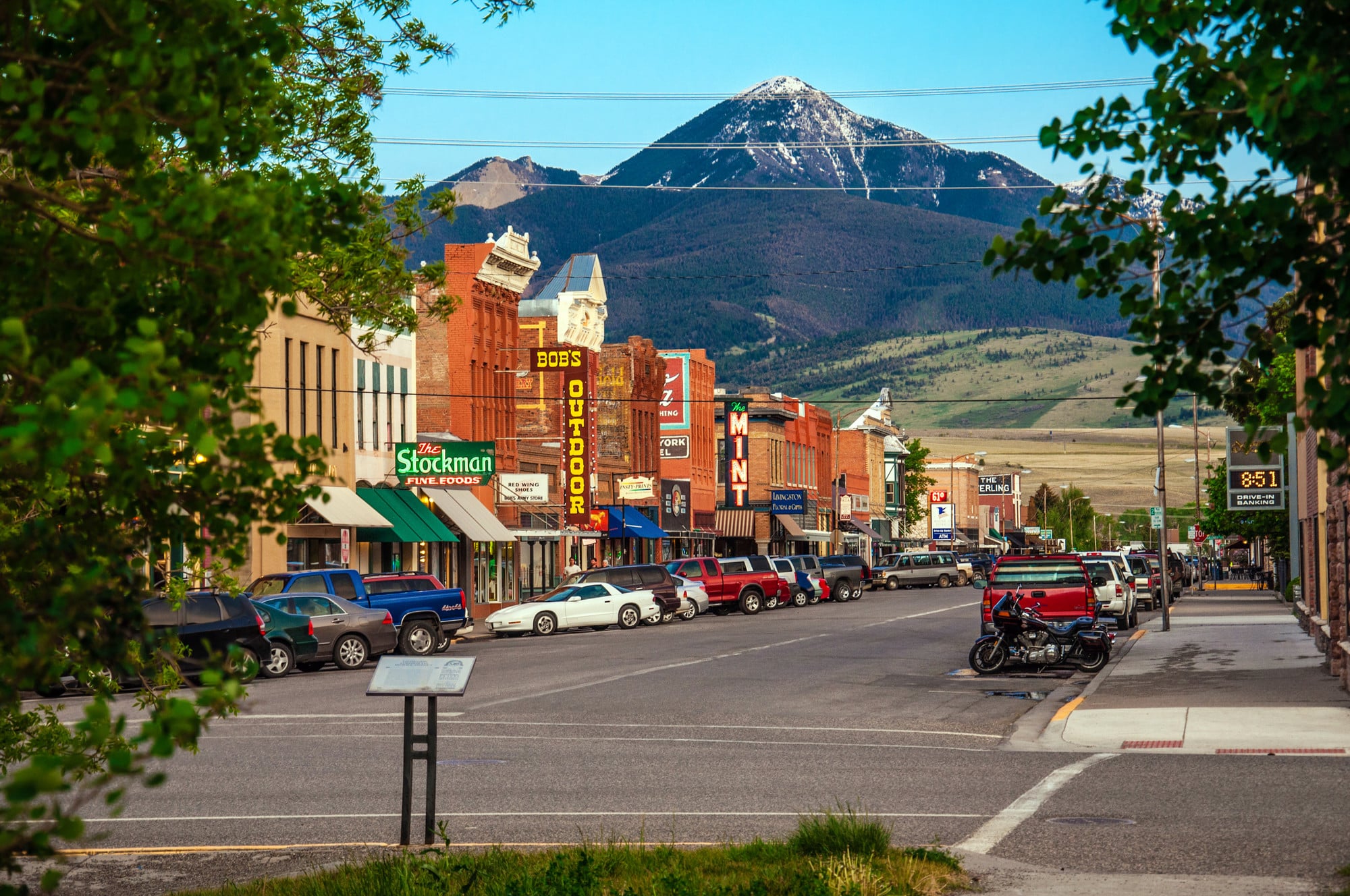
Main Street runs about ten blocks and it’s the reason a lot of people fall for this town on a first visit. Coffee in the morning, a bookstore, a hardware store that’s been there twenty-five years, restaurants busy on a Tuesday in February, with Bridger views at the end of the street.
The historic districts south of Main are the best known, and the Bon Ton is the one people name most: tree-lined streets, alleys, front porches, and houses built long before anybody designed a neighborhood around parking two cars. You get a street that already feels finished, with trees that took eighty years to reach that size. Midtown is the other half, the North 7th corridor northwest of downtown, actively changing with apartments, restaurants, breweries, and a walkable density that wasn’t there a decade ago, though it’s still filling in, so you’re buying mid-transition.
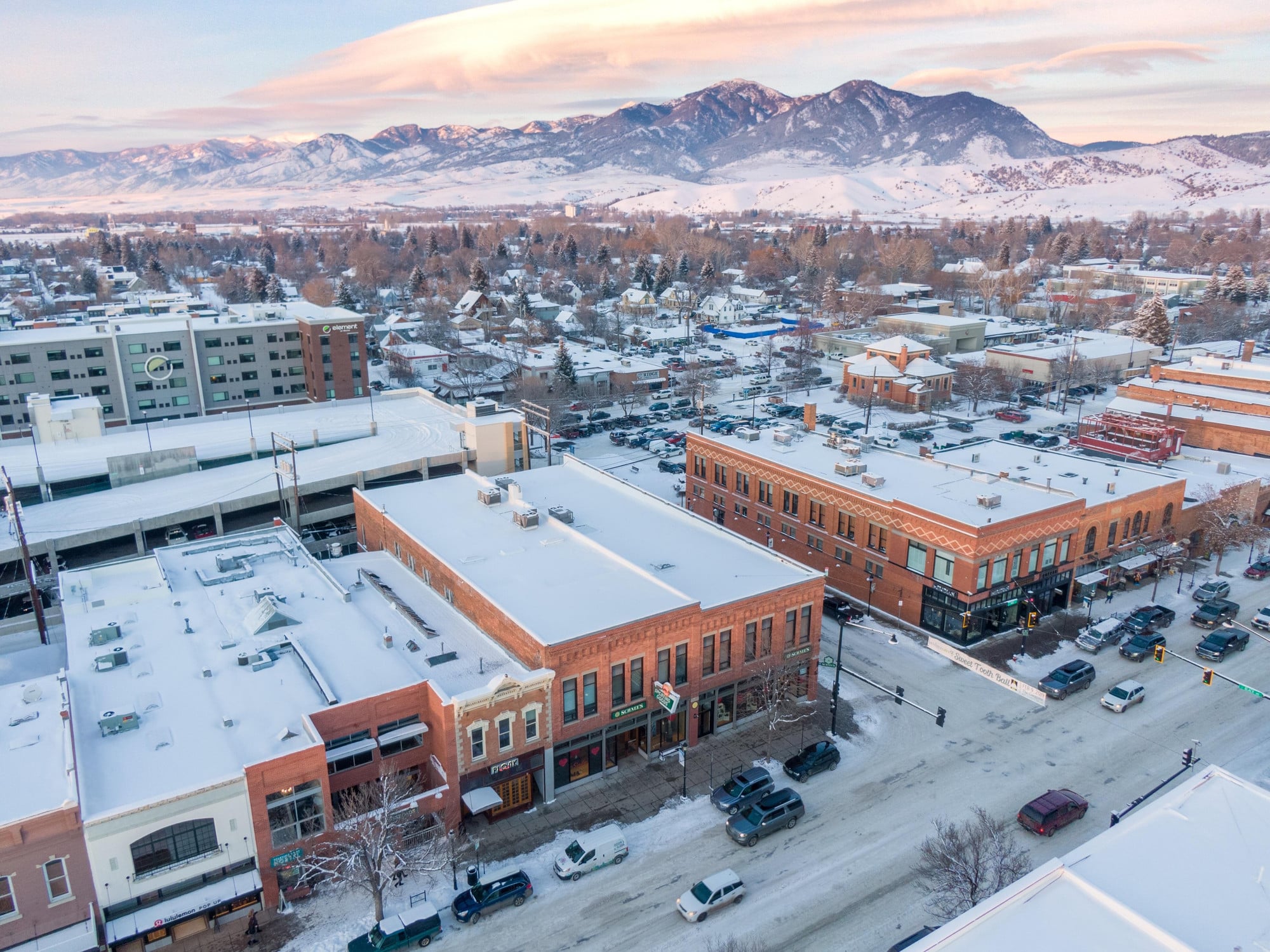
What does living down here cost? The highest price per square foot anywhere in the valley, and the smallest lots on this list. A lot of the inventory is old enough that you’re taking on maintenance somebody has been deferring, along with the original lot size and usually room to renovate. What you get back is walkability, dinner without moving the car, a trailhead you can bike to, and a resale market that stays liquid when the rest of the valley slows, because the land within walking distance of Main Street is fixed and there will never be more of it. The people who take that trade would rather have the location than the extra bedroom.
New construction, and the city limits question
There’s a wave of new construction going up around Bozeman right now, and four neighborhoods draw the most questions. Gran Cielo and Blackwood Groves are on the south side and both sit inside city limits. Woodland Park and Sierra Vista are outside, as are a lot of the subdivisions running west toward Four Corners. You won’t find that on a listing, because the houses and finishes look similar and the sign out front says nothing.
Is there a catch to buying outside city limits? Three, and they sometimes compound. You can be on well and septic instead of city water and sewer, so maintenance and replacement are yours, and that expense arrives all at once rather than monthly. Services come from the county rather than the city, which changes plowing, response times, and who you call. The tax picture differs too, working in your favor some years and against you in others.
Neighborhoods outside the limits today can also get annexed later, and when that happens the whole picture changes again. Nobody can tell you exactly when or whether that happens, though the city’s growth policy does show the direction, which points northwest, west, and toward the south side. Four Corners is the far end of the idea, where heading west out Huffine puts you in unincorporated Gallatin County with more land, different rules, none of Bozeman’s city services, and usually fifteen to twenty minutes back to downtown. None of that makes a house outside the limits a bad buy, and plenty of people out there knew exactly what they were signing.
The west side
The west side is the run of neighborhoods along Oak, Durston, Baxter, Ferguson, and Cottonwood, including Valley West, Flanders Mill, Baxter Meadows and Baxter Meadows West, Harvest Creek, and Westwinds. Housing out there is generally newer, so the maintenance load is a fraction of what you take on downtown.
What organizes daily life on this side is Gallatin Regional Park, 87 acres in the center of town with walking trails, a sledding hill, a dog park, a dinosaur playground, rock climbing, and ponds. People end up there a few evenings a week without planning to. Schools are the other piece, with a lot of good options and many homes close enough that walking is realistic, though boundaries change, so check the current assignment on a specific address before you get attached to it.
So who does the west side fit? Mostly newer houses, and a short trip to everything. You’re less than ten minutes from downtown, close to the interstate for Belgrade or the airport, with groceries and errands right there. The future growth story is Northwest Crossing, a master-planned community combining single family homes, townhomes, apartments, large central parks, and mixed-use commercial, with a few restaurants already open. Buying here means buying into a part of Bozeman still being finished, and the finished version won’t look like today’s, which some people find exciting and others find exhausting.
The established south side
Running down past Kagy toward Sourdough is where you find neighborhoods that have already been through a few cycles: Alder Creek, Westfield, New Hyalite View, and the pockets along Sourdough Road. The character is the opposite of new, with streets paved decades ago, trees that are actually trees, and few areas left where a framing crew starts next door at seven in the morning.
Access is the underrated part, since you’re close to Montana State, pointed straight at Hyalite Canyon, with the Sourdough trail system right there. For anybody whose weekend actually happens outdoors, this side of town shortens every drive. These neighborhoods tend to hold value, which you’d expect from an established area, and the part that surprises people is that several have started appreciating faster than other established pockets because of their position relative to downtown, MSU, and the healthcare sector.
New Hyalite View is the one I’d point at specifically, since it’s the play most arrivals don’t see. Primarily 1970s construction, a lot of split-level floor plans, and lots bigger than a new subdivision gives you at a similar price. I’m watching people buy homes there that need a little work, do the work, and end up with a home in a proven location that fits how they live. That’s counterintuitive on this list, because most people relocating shop for the newest house they can afford, when the better outcome is often an older home in a neighborhood that already proved itself.
The canyons
Leaving city limits entirely gets you the version of Montana a lot of people had in their heads the whole time. Bridger Canyon runs northeast toward Bridger Bowl, with the ski hill twenty to thirty minutes from downtown depending where you are in the canyon. Springhill sits north with lots running from an acre or two to several hundred. Gallatin Gateway points southwest toward Big Sky, and there’s the Hyalite side south of town. Different roads and a different feel on each, with the same idea underneath: your money goes into acreage rather than finishes, buying space, quiet, and dark sky at night.
What are you giving up? More than most people account for, because every grocery run, school pickup, and dinner in town is a drive. You’re usually on well and septic again, maintaining your own road and your own plowing. Winter is the real test, since a heavy snow year that’s an inconvenience in town becomes a logistics problem up a canyon. The people who love it out there love it anyway, and the ones who struggle usually ran numbers on the house without thinking hard about the drive. Be honest about the commute before you fall for the view, because the view does a lot of persuading during a July showing.
Where I live, and what I weighted
I live on the west side near the regional park. What I weighted was position in the most practical sense. From my house I can be downtown, at the grocery store, or standing at a trailhead in under ten minutes, and Four Corners is about fifteen. That distance holds up whichever direction I point the car, and after a few years I value it more than almost anything about the house itself. The walkability mattered more than I expected, since the park is a couple of blocks away and I use it constantly.
If I were starting over, I’d weight downtown heavily. A different kind of walkability, and being in the middle of what happens on Main Street has real pull for me. Those are my priorities though, and yours will land elsewhere, because what makes one of these five right for you is what your ordinary Tuesday actually looks like. Weighing that against what the money does over the next decade is the point of the Montana Move Method.
Prefer to watch?
Here’s the full walk-through of all five, plus where I landed.

If the video doesn’t load, you can watch it here on YouTube.
Choosing an area in Bozeman: quick answers
How do I know if a Bozeman home is inside city limits?
Listings don’t state it and the homes look identical, so you have to check the address against the city boundary directly. Gran Cielo and Blackwood Groves sit inside, while Woodland Park, Sierra Vista, and much of what runs west toward Four Corners sit outside.
What changes if a home is outside Bozeman city limits?
You may be on well and septic rather than city water and sewer, meaning maintenance and replacement are yours, and services including plowing come from the county rather than the city. The tax picture also differs, and the property can be annexed into the city later.
Which part of Bozeman has the most parks and trails?
The west side is the common answer, with newer housing, lighter maintenance, Gallatin Regional Park, and a lot of schools close enough to walk to. Buyers who prioritize trail access and older streets over new construction usually land on the established south side instead.
Is it better to buy an older Bozeman home or a new one?
Most people relocating shop for the newest house they can afford, when an older home in a proven neighborhood often produces the better result. New Hyalite View is the clearest example, with 1970s homes on lots larger than a new subdivision offers at a similar price.
What is it like living up a canyon near Bozeman?
You get acreage, quiet, and dark sky, paid for in drive time on every grocery run, school pickup, and dinner in town. You’re typically on well and septic, maintaining your own road and plowing, and a heavy snow year becomes a real logistics problem.
Which Bozeman neighborhood has the best resale?
Downtown holds the most liquid resale market because the land within walking distance of Main Street is permanently fixed. Established south-side neighborhoods hold value reliably as well, and several have been appreciating faster than other established pockets.
Tell me what your ordinary Tuesday looks like
That’s genuinely the whole question. Book a call with me and describe your week, and I’ll tell you honestly which of these five I’d show you and which I’d skip.