
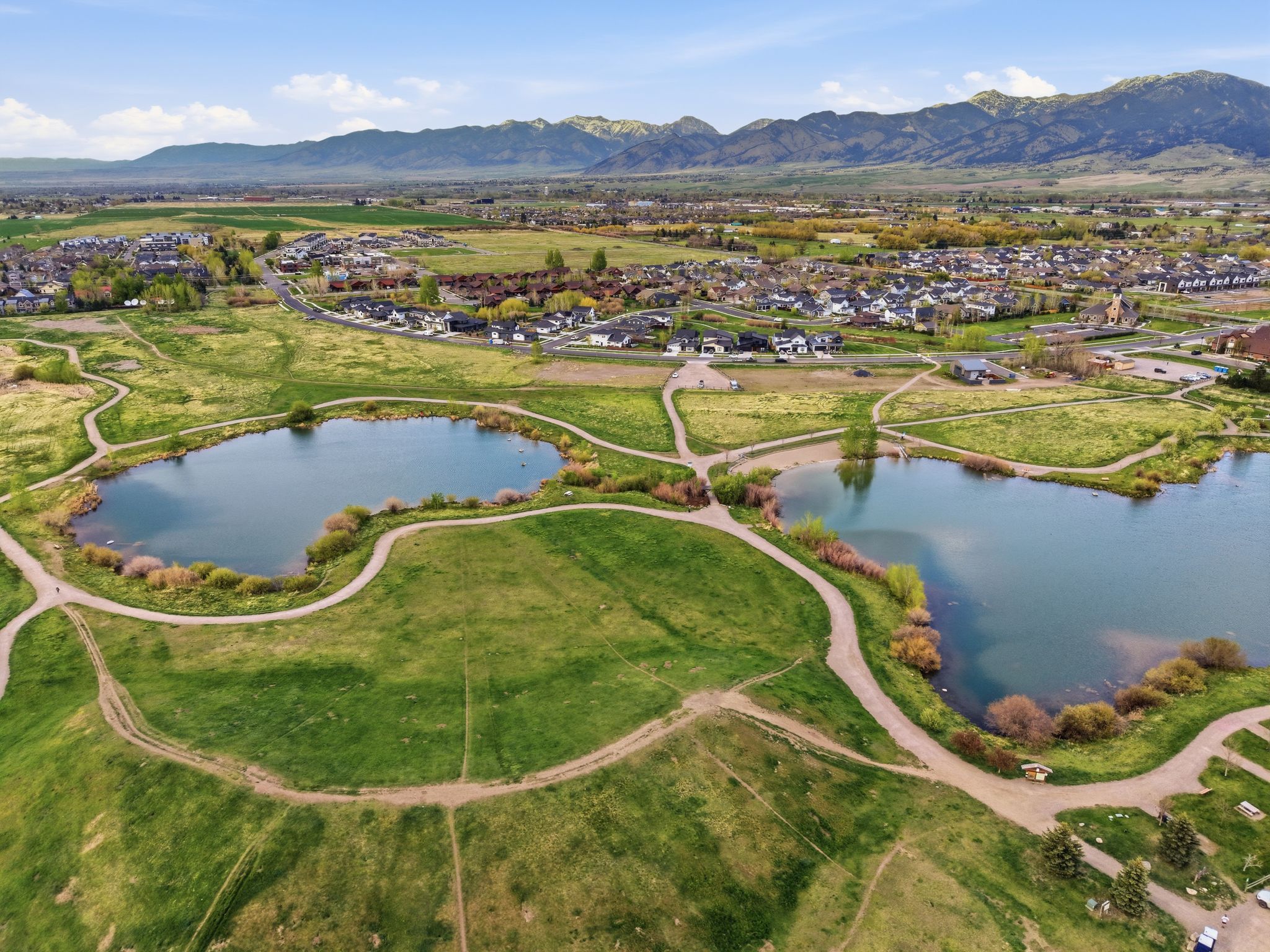
Bozeman and the Gallatin Valley aren't one place. There's a collection of areas here, and each one answers a different question about how you want to live. Bozeman is the biggest by far, so much so that it's really three distinct places under one name.
I moved here myself in 2016, so I've sat in the seat you're in. Below is the whole valley, the city broken into its real sides and the towns spread around it. Stick with the towns section, because for a lot of the buyers I work with, the place that fits best turns out to be one just outside Bozeman they never thought to look at.
Rather listen than read? I walk the whole valley on camera: Moving to Bozeman? Here's Where You Should Actually Live.
The short version
Bozeman splits into three different lives depending on which side of town you land on: downtown, the west side, and the south side.
Belgrade, Manhattan, Three Forks, Livingston, Ennis, and Big Sky each trade drive time for something specific, whether that's land, price, character, or the mountains.
Start with the one thing you're optimizing for. That single filter cuts the list down faster than anything else.
Where should you live in the Gallatin Valley?
Pick your area by the one thing you're unwilling to compromise on: walkability, new construction, land, price, or proximity to the mountains. Downtown Bozeman answers walkability, the west and south sides answer new construction, Belgrade and Three Forks answer value and land, Livingston and Ennis answer character and river access, and Big Sky answers the mountains. Most buyers who end up happy did this filtering before they started touring, rather than after.
Bozeman is really three different places
Downtown. The walkable heart of the city, with tree-lined streets, historic homes from the early 1900s, and Main Street a few blocks away. What does that run you? You're paying for location and character rather than square footage or land, which means an older home on a smaller lot at a real premium. If a life you can do on foot is the goal, downtown pays that back daily, and you'll feel the trade in the yard.
The west side. Where a lot of Bozeman's recent growth landed, in newer subdivisions like Norton Ranch and Flanders Mill with parks, trails, and amenities built in. Your money buys newer construction, bigger floor plans, and generally more house than downtown, on a lot that's modest but workable. Growing families land here often, in part because of how close the schools are.
South Bozeman. A decade ago this was farmland and a handful of older neighborhoods. Now it holds thousands of new homes across subdivisions that didn't exist before, from design-forward communities like Gran Cielo to walkable mixed-use builds like Blackwood Groves, plus larger-lot and luxury pockets closer to the foothills with Hyalite Canyon right there. This is the fastest-changing part of the city, and it carries the widest range of price points in new construction.
Belgrade: more house and land for the money
Head northwest about ten minutes and you're in Belgrade, which has grown right alongside Bozeman and splits into two different places once you're there. The inner core near Main Street is the older established heart of town, with more attainable homes on standard lots, a real small-town center, and the shortest hop back into Bozeman. South of the interstate, whole master-planned communities are coming out of the ground, including Westpost and Jackrabbit Crossing, built as live-work-shop neighborhoods with their own grocery, retail, parks, and trails mixed in among the homes. On the north side, Meadowlark and other new subdivisions offer modern builds on lots bigger than you'll easily find in Bozeman at comparable money.
Here's the part a lot of buyers miss. Most people relocating have no idea how much Belgrade has grown or what's going in right now, and for a similar home you'll often get meaningfully more house and land than inside Bozeman. The honest trade is a little more time in the car. What's that trade worth, though? The two towns keep growing toward each other, so that gap has been narrowing for years, while the value you buy in at stays with you.

Manhattan: small-town Montana on an acre
Another ten minutes west of Belgrade is Manhattan, which is real small-town Montana. Deep Dutch farming roots nearby, one main intersection, and the Gallatin River just up the road with some of the best fishing in the valley.
Something here surprises people. For a town this size, prices run closer to Bozeman than you'd expect, because most of what sells sits on an acre or more, so the land is most of what you're buying. It suits somebody who wants elbow room, quiet, a genuine community feel, and who's fine with a twenty to twenty-five minute drive into Bozeman for amenities and sometimes for work.
Three Forks: the value end of the valley
Another ten miles down the interstate brings you to Three Forks, where the wheat fields roll and three rivers meet to form the Missouri. There are two different ways to buy in here. Inside the historic town limits you'll find some of the most affordable houses on this whole list, on real in-town lots. Head north and west into the Wheatland area and the land opens up, which is where you'll find real acreage, room for horses and a shop, for the least money of anywhere covered here. That one fits a buyer who wants maximum space per dollar and doesn't mind a thirty-plus minute drive into Bozeman.
One wrinkle is worth knowing before you fall for a price out there. Many of the bigger parcels north and west of town sit in Broadwater County rather than Gallatin, which changes your property taxes and which county services you're dealing with. School district boundaries out here don't follow county lines, so check the county and the district separately rather than assuming one tells you the other. On the rural lots, especially north of town, confirm the well, the power, and legal road access, since a good number of them are still off-grid.
Livingston: character, wind, and a mountain pass
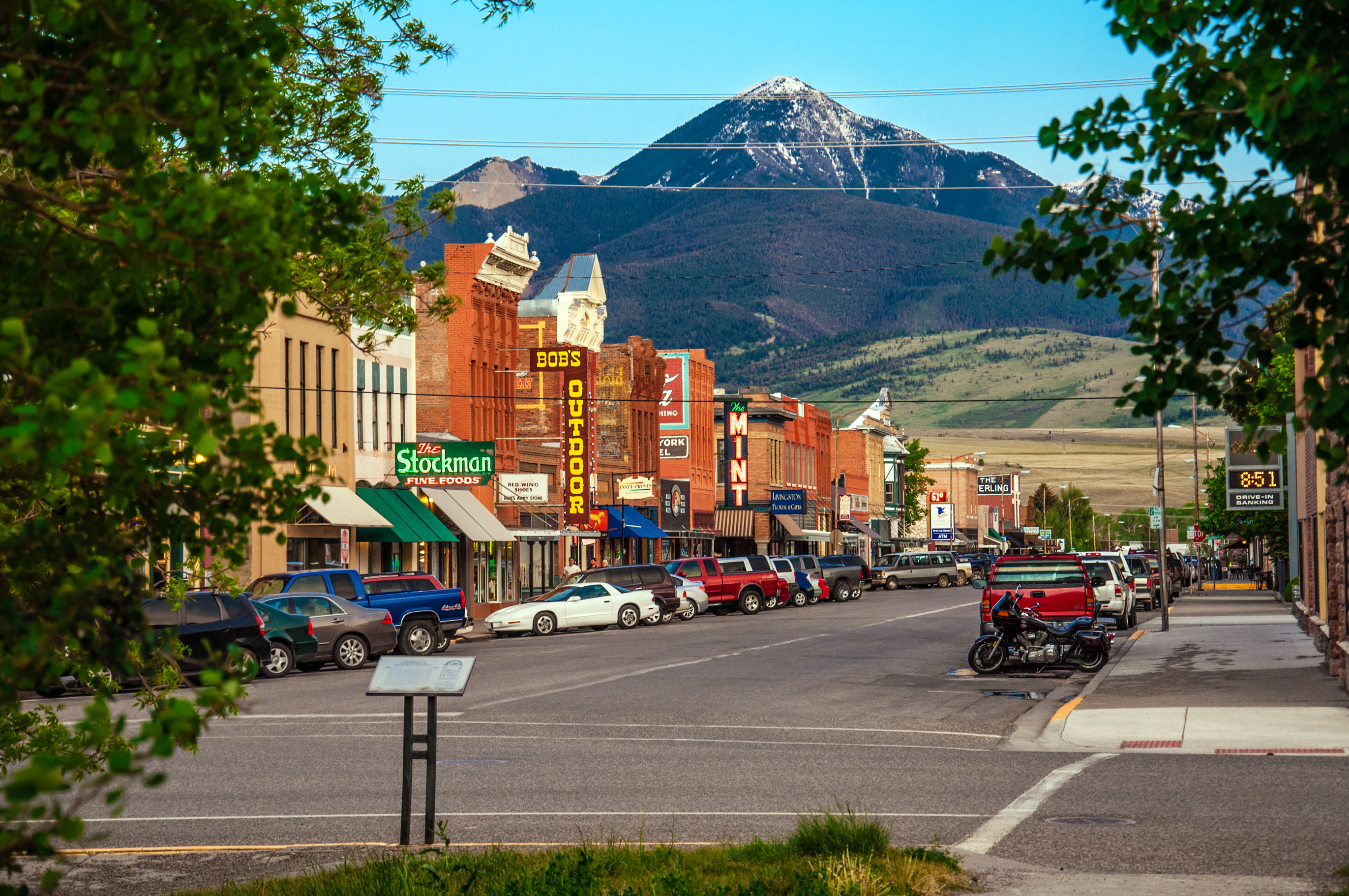
Take the interstate east over Bozeman Pass, about a half hour out, and you drop into Livingston. An old railroad town turned arts town, walkable and a little quirky, with the Yellowstone River running right through it and Paradise Valley opening south toward the park. Your money goes further here and the downtown has an identity entirely its own.
So what's the catch? Two of them. Livingston is known for its wind, especially in winter, and it can be relentless. You're also commuting over Bozeman Pass, which slows down or closes outright in a hard storm. If neither one bothers you, you're getting space and character well under what Bozeman runs.
Ennis: fly fishing country
About an hour southwest of Bozeman in the Madison Valley sits Ennis, which is fly fishing country in the truest sense: the blue-ribbon Madison River running through it, mountains in every direction, and a small Old West downtown. Ennis draws retirees, second-home buyers, and remote workers, because the place itself is the reason you'd come. The reality check is the remoteness. Jobs and shopping are limited, and an hour each way is a real daily commute rather than a scenic one.
Big Sky: a market of its own
Big Sky is the outlier here and plays by its own rules: a world-class resort community in the mountains that's grown into a major draw on its own terms, with Mountain Village near the slopes and Meadow Village lower down by the golf course. It pulls second-home buyers, investors, and people chasing the mountain lifestyle full-time, and almost nobody commutes from Big Sky to a desk job in Bozeman. That makes it a lifestyle and investment decision rather than a where-do-I-work-from decision.
How to narrow this down fast
Start with the single thing you're optimizing for, because every place here answers a different priority: walkability, new construction, land and quiet, lifestyle and destination, or value with room to grow. That one filter cuts the list down considerably before you look at a listing.
And remember what I said at the top. For a good number of the buyers I work with, the place that fits best ends up being somewhere just outside Bozeman they didn't take seriously at first. Does that make Bozeman itself the wrong call? Not at all, and for plenty of people it's exactly right. Look at the whole valley before you settle on one corner of it.
Both kinds of wealth
The process I use with clients weighs two things at once: the financial side, meaning equity, timing, and long-term return, and the lifestyle side, meaning space in a place that fits how you want to live. That's the thinking behind the Montana Move Method, and it's why where-to-live comes before which-house in every conversation I have.
If you want the full walk-through of the numbers, the neighborhoods, and the timing, start with our guide to relocating to Bozeman, and browse the individual communities in our Bozeman subdivisions overview.
Prefer to watch?
Here's the whole valley on camera, area by area.
If the video doesn't load, you can watch it here on YouTube.
Where to live near Bozeman: quick answers
What towns are near Bozeman, Montana?
The main towns around Bozeman are Belgrade about ten minutes northwest, Manhattan another ten minutes west, Three Forks roughly thirty minutes west, Livingston about thirty minutes east over Bozeman Pass, Ennis about an hour southwest, and Big Sky in the mountains to the south. Each trades drive time for a different combination of price, land, and character.
Where is the cheapest place to live in the Gallatin Valley?
Three Forks and the surrounding Wheatland area offer the lowest prices of the communities covered here, with real acreage available for less than anywhere else in the valley. The trade is a thirty-plus minute drive into Bozeman and, on some rural parcels, off-grid utilities you'll need to verify.
Is it cheaper to live in Belgrade than Bozeman?
For a comparable home, Belgrade typically delivers more house and more land than Bozeman at the same price point. The trade-off is roughly ten more minutes of driving, and the two towns have been growing toward each other for years, which has narrowed that gap.
Which side of Bozeman should I live on?
Downtown suits buyers who want walkability and historic character and will accept an older home on a smaller lot. The west side suits buyers who want newer construction and quick school access, and the south side offers the widest range of new-construction price points along with the closest access to Hyalite Canyon.
What should I check before buying acreage outside Three Forks?
Confirm which county the parcel sits in, because many larger lots west and north of town are in Broadwater County rather than Gallatin, which changes taxes and county services. Verify the school district separately, since those boundaries cross county lines, and check the well, power, and legal road access on any rural parcel.
Can you commute to Bozeman from Big Sky?
Very few people commute daily from Big Sky to a job in Bozeman, and the drive involves a canyon road that weather affects regularly. Big Sky functions as a lifestyle and investment market rather than a bedroom community.
Want help narrowing it down?
If you've read all of this and two or three places are still in the running, that's the conversation I'm best at. Book a call with me and tell me the one thing you won't compromise on and the one thing you'd give up. I'll tell you which corner of this valley that points to, and what it costs there right now.
Keep reading
Posted by Chase Heiland onEnjoy this blog post? Click here to subscribe for updates
Leave A Comment