The Bozeman boom is over, and I’m not going to pretend otherwise. Montana’s growth has slowed to well under half of what it was at the pandemic peak, the median single family price in Bozeman came down hard off its high, and payrolls in the Bozeman metro are smaller than they were a year ago. People keep moving here anyway, and the reasons they come tell you a lot more about whether a move makes sense for you than any headline about the slowdown.
I moved to the Gallatin Valley from Southern California in 2016, so I’ve seen this market run hot and then cool off from the inside, and the cooling is the part most people misread.
If you’d rather watch or listen, I walk through every number on camera in Why People Are STILL Moving to Bozeman, Montana (The Boom Is Over).
The short version
Bozeman’s population boom has ended, and Gallatin County is still adding people, close to 10,000 new residents between the 2020 census and 2025.
Gallatin County’s economy runs on far more than tourism, with more than 40 optics and photonics companies, record research spending at Montana State University, and new investment at the airport, the hospital, and a defense plant.
Buying a median-priced home in Gallatin County takes an income of roughly $180,000 a year, close to double what a typical household in the county earns.
Whether a move to Bozeman works for you usually comes down to where your income will come from.
Why are people still moving to Bozeman?
People are still moving to Bozeman because the things that drew them here never depended on the boom. Gallatin County has a growing research and technology economy, steady investment from employers planning around the next decade, and outdoor access that most mountain towns can’t match within a short drive. The frenzy of the pandemic years is over, and the population keeps growing at a slower, steadier pace.
How much has Bozeman’s growth slowed?
It slowed a lot, and the numbers are public, so there’s no point dressing them up. Montana added nearly 18,000 people in 2021 at the height of pandemic migration, and in 2025 it added about 7,100, the second-lowest growth rate in fifteen years, according to Census Bureau estimates reported by Montana Free Press. Bozeman itself gained 689 residents in 2025, about 1.2 percent, down from 788 the year before.
The version of the market people mean when they say boom is finished, too. That was the stretch where buyers waived inspections and went $40,000 over asking on a house they’d only seen in pictures. The median single family price in Bozeman peaked at $898,000 in May 2023 and sat at $715,000 in February 2026, as Montana Free Press reported this spring, and I don’t expect that frenzy to come back.
Here’s what surprises people. A boom ending and a town emptying out are two very different events, and most headlines treat them as one. Gallatin County grew from 118,957 people at the 2020 census base to an estimated 128,740 in 2025, according to the Census Bureau, which works out to close to 10,000 new residents. Slower growth is the national pattern right now, since nearly eight in ten U.S. counties that grew in 2024 saw their growth slow or reverse in 2025. What ended here was the frenzy, and I’d say the frenzy was never the reason anybody moved to Montana in the first place.
Does Bozeman have a real economy beyond tourism?
The thing I hear most from people outside the valley is some version of this, that Bozeman’s a ski town built around a university with no real industry behind it. That’s not close to true. Bozeman is home to more than 40 optics and photonics companies, and the Montana World Trade Center describes southwest Montana as having the highest per-capita concentration of optics and photonics firms in the country.
If photonics is a new word for you, it means lasers, optics, and the precision glass and crystal that go into them, and the work here runs from remote sensing and medical imaging to defense and quantum research. In December 2025 the U.S. Patent and Trademark Office picked Montana State University to host a new community engagement office serving part of an eight-state Rocky Mountain region, which isn’t something that happens to a town with no economy. Montana State also set a research spending record of about $308.7 million in fiscal 2026.
Does any of that pay well? More than most people assume. In the first quarter of 2026, the average weekly wage in Gallatin County was $1,353, about 10 percent above the statewide figure of $1,229, according to the Bureau of Labor Statistics. That won’t feel like a raise if you’re coming from California, Washington, or the East Coast, and I’d rather say that up front. What it does tell you is that this isn’t a seasonal service economy, because a county running on that kind of work doesn’t come in above its own state’s average.
There’s another side to the job picture, and you should hear it from me. Total payrolls in the Bozeman metro were down about 2 percent in August 2026 compared with a year earlier, in preliminary BLS data, so anybody telling you the job market here is on fire isn’t reading the same numbers I am. For the most part I wouldn’t let that worry you, because the metro’s unemployment rate was 2.3 percent that same month, and a flat year sitting on top of a rate that low is a completely different problem than having no jobs at all.

Who’s investing in the Gallatin Valley right now?
The biggest bets on the next ten years are getting made out by the airport. Bozeman Yellowstone International moved 2,809,419 passengers in 2025, a record and the busiest in the state, and a $190 million East Terminal expansion is under construction now.
North of town, Lattice Materials is building an 80,000-square-foot plant. The company has been in Bozeman since 1989, turning silicon and germanium into lenses and optics that end up inside U.S. military systems, and an $18.5 million Pentagon award announced in December 2025 is helping pay for the new building. About 50 new jobs are expected over three years, with construction starting this spring and the plant scheduled to open in 2027.
The spending reaches past the airport, too. Bozeman Health plans to double the size of its emergency department after ER visits grew 32 percent over five years, and it’s planning for another 40 to 50 percent growth across the next decade. Nobody commits money on that kind of timeline to a town they believe is shrinking, and a hospital and a defense manufacturer are both betting their own balance sheets on how many people are going to live here.
How much income do you need to buy a home in Gallatin County?
This is the number that decides whether moving here is even possible for you. By my math, it takes somewhere around $180,000 a year in income to buy a median-priced home in Gallatin County. The Census Bureau puts the county’s median household income at about $93,500, so the house costs close to double what the people already living here bring in. Inside Bozeman city limits it’s higher still, since an economic report the city commissioned in 2025 put the income needed for a median home at roughly $220,000.
That’s a real problem in this valley, and I won’t dress it up. The starter house most people picture when they think about moving to Montana has mostly stopped existing inside Bozeman city limits. What’s left sits in Belgrade, Manhattan, Three Forks, and the towns further out, where the same square footage costs meaningfully less.
Notice what that income gap is telling you, though. Prices only run that far ahead of local wages when a lot more people want into a market than there are homes for them, and that isn’t what a town in decline looks like.
Why do people pay Bozeman prices anyway?
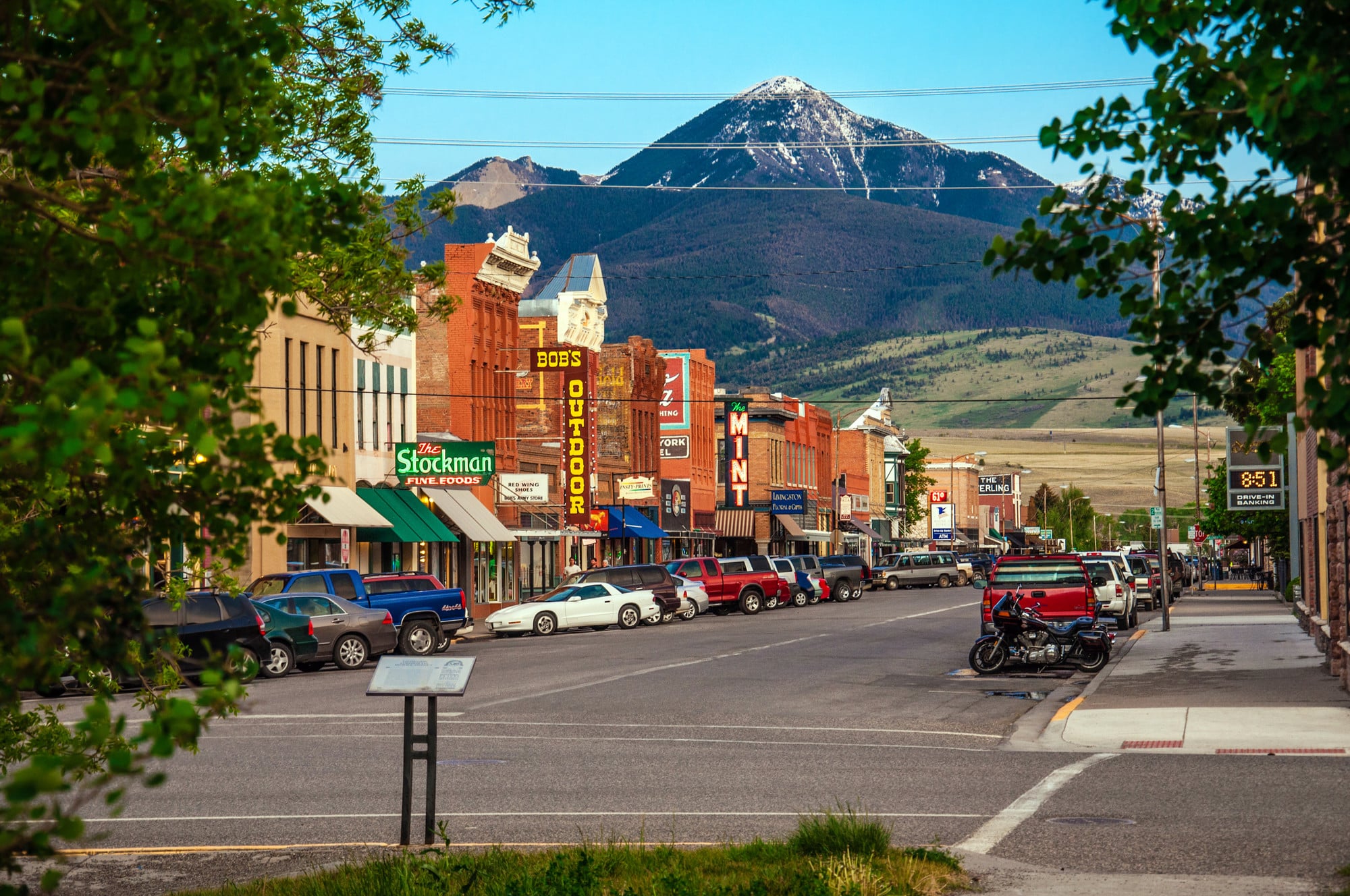
Almost nobody moves here because the math worked out perfectly. What gets people is how an ordinary Tuesday goes here, and what separates this valley from other pretty mountain towns is how short the drive to everything is. The Bridger foothills sit about 15 minutes from downtown, Bridger Bowl is twenty-some minutes north of town, and you can be standing in the Gallatin or the Madison, two trout rivers people fly in to fish, inside an hour. So instead of planning a long weekend around skiing or fishing, you end up doing it after work on a Wednesday in October.
What’s the catch? Winter is long, January gets dark, and the trailheads carry lines they didn’t ten years ago. Some people figure out in a year or two that they liked the idea of living here more than the reality, and I’d rather you hear that before you move.
You can see how much the mountains and rivers drive this place in the state’s economic numbers. Outdoor recreation made up 4.9 percent of Montana’s economy in 2024 and supported 32,094 jobs, the third-highest share of any state behind Hawaii and Alaska, according to the Bureau of Economic Analysis. Plenty of outdoor companies picked Bozeman for the same reason. Simms builds its waders at its plant out at Four Corners, west of town, Oboz is headquartered here, and Schnee’s, which traces its roots to 1946, still runs its flagship store on Main Street. None of that fits on a spreadsheet, and for most of the people I sit down with, the life here was never the part they were unsure about.

How I’d sort a move to Bozeman by income source
If you were sitting across the table from me, I’d start by asking where your income is going to come from, because that changes almost everything about how I’d approach the move.
Income from outside the valley
Bringing a remote role, or equity out of a sale in a more expensive market, puts you in a good spot, because the price correction already happened and that can be most of the story for you. The median came off its peak and flattened out, and homes in Bozeman still go under contract in about three weeks, so you’ll want to move decisively when the right house shows up.
A paycheck from here
For someone whose income will come from a local job, the job matters more than the house, and I’d sort them in that order. Landing at one of the optics companies, a tech firm, Montana State, or Bozeman Health changes the math completely, and a seasonal service job can make it very hard. I’d rather say that now than after you’ve signed something.
Homeowners who bought before 2021
If you already own a home here from before 2021, you’re in the strongest position of anybody reading this. The one soft spot left in the market is condos and townhomes, which is worth knowing if you’re thinking about moving up or moving within the valley.
It’s the same market in all three cases, and which one you’re standing in decides which towns and neighborhoods deserve your time. My Bozeman subdivisions guide is a good place to start narrowing that down.
Building wealth and a life worth the move
So where does that leave the boom? It’s over, and the version people mean by it is finished. The research money, the optics companies, the hospital, the airport, and the reason somebody in Denver or Seattle or Southern California is searching “moving to Bozeman” late at night were never the boom, though. All of it was here before 2020, and it’s kept building right through the slow year.
Getting here is the easy part. What a move like this costs or earns you over the next ten years comes down to the decisions you make in the first six months, and that’s where a home has to pull double duty, building real equity and fitting the life you came here for. The Montana Move Method is built around that balance.
Prefer to watch?
I cover all of this on camera too, including the plant going up north of town and how I’d sort your move.

If the video doesn’t load, you can watch it here on YouTube.
Moving to Bozeman: quick answers
Is the Bozeman boom over?
The Bozeman boom is over in the sense most people mean, with bidding wars, waived inspections, and prices climbing every month. Growth hasn’t stopped, though. Gallatin County added close to 10,000 residents between the 2020 census and 2025, and the city of Bozeman added 689 people in 2025, about 1.2 percent, per Census Bureau estimates.
What is the job market like in Bozeman?
The Bozeman job market is tight and cooler than it was a year ago. Unemployment in the Bozeman metro was 2.3 percent in August 2026, while total payrolls were down about 2 percent from a year earlier in preliminary Bureau of Labor Statistics data. Tech, optics, Montana State University, and health care anchor many of the higher-paying jobs.
Where are the jobs in Bozeman?
Jobs in Bozeman cluster around Montana State University, Bozeman Health, a growing tech sector, and more than 40 optics and photonics companies, along with construction, retail, and hospitality. Gallatin County’s average weekly wage was $1,353 in the first quarter of 2026, about 10 percent above the Montana average, according to the Bureau of Labor Statistics.
What is the photonics industry in Bozeman?
Bozeman’s photonics industry is a cluster of more than 40 optics and laser companies working in remote sensing, medical imaging, defense, and quantum research. The Montana World Trade Center describes southwest Montana as having the highest per-capita concentration of optics and photonics firms in the country, much of it connected to Montana State University.
How much do you need to earn to buy a house in Bozeman?
Buying a median-priced home in Gallatin County takes an income of roughly $180,000 a year, close to double the county’s median household income of about $93,500. Inside Bozeman city limits, a 2025 economic report commissioned by the city put the income needed for a median home at about $220,000.
Is Bozeman a good place to move if you work remotely?
Bozeman can be a strong fit for remote workers, because income earned outside the valley meets a housing market that has already come off its 2023 peak. Montana’s busiest airport, Bozeman Yellowstone International, handled a record 2.8 million passengers in 2025, which makes work travel easier than from most Montana towns.
What outdoor recreation is near Bozeman?
Bozeman sits about 15 minutes from the Bridger foothills and twenty-some minutes from Bridger Bowl ski area, with the Gallatin and Madison rivers, both well-known trout fisheries, within about an hour. Outdoor recreation made up 4.9 percent of Montana’s economy in 2024, the third-highest share of any state.
Talk through your move with me
If you’re weighing a move to Bozeman and want to know which of those three situations you’re in, book a call with me. We’ll go through your income, your timeline, and the towns that fit how you want to live, and you’ll come away knowing what to do next.
Keep planning your move
- Relocating to Bozeman, everything I’d want you to know before making the move to the Gallatin Valley
- My free Bozeman relocation guide, which walks you through your own situation step by step
A note on these numbers: Montana is a non-disclosure state, so real sold prices are not public. The days-to-contract figure here comes from Big Sky Country MLS via Domus Analytics and reflects actual closed transactions, which is why it can differ from estimates on public listing sites. Population, wage, and job figures come from the government and news sources named in the post.