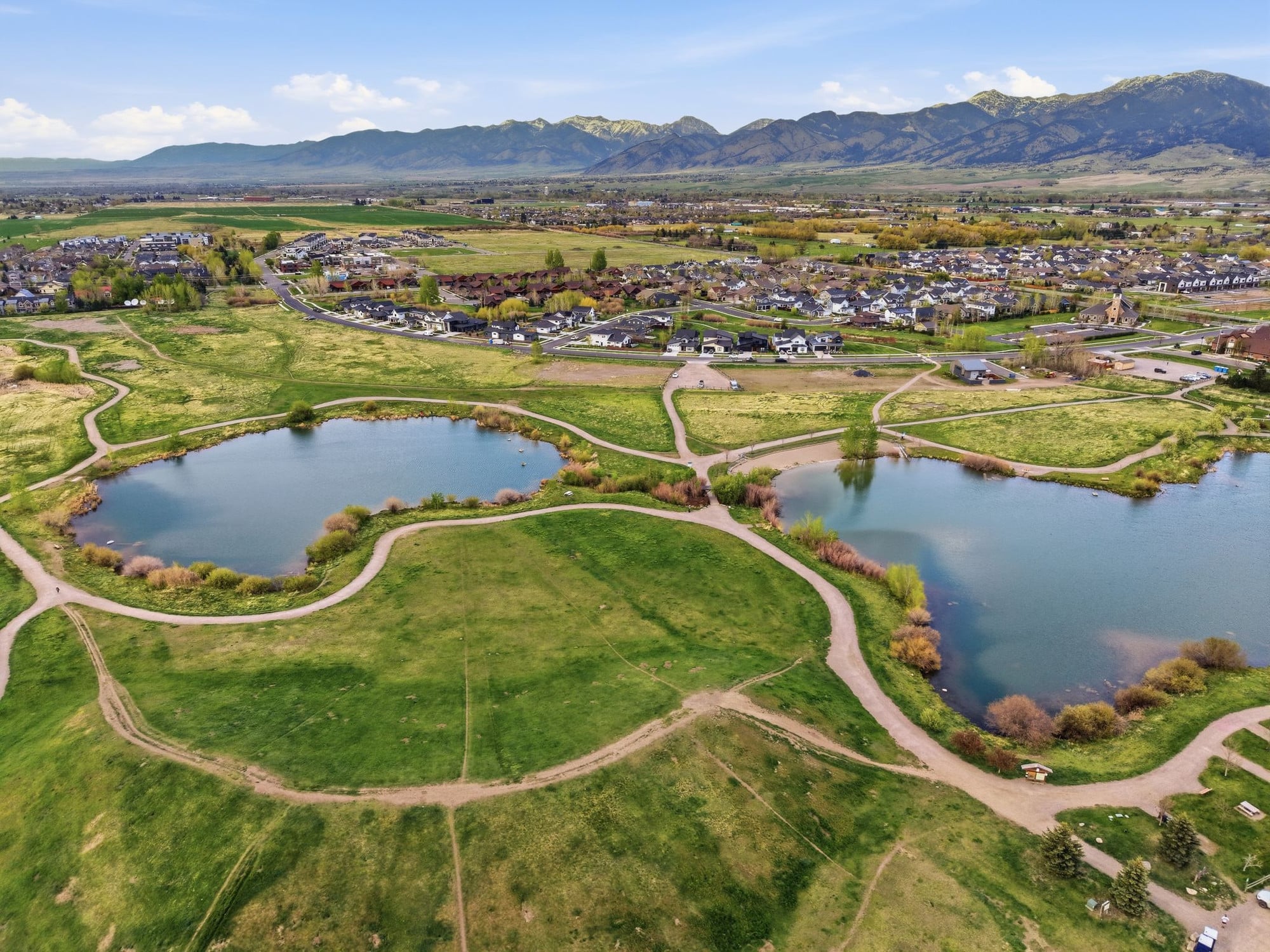
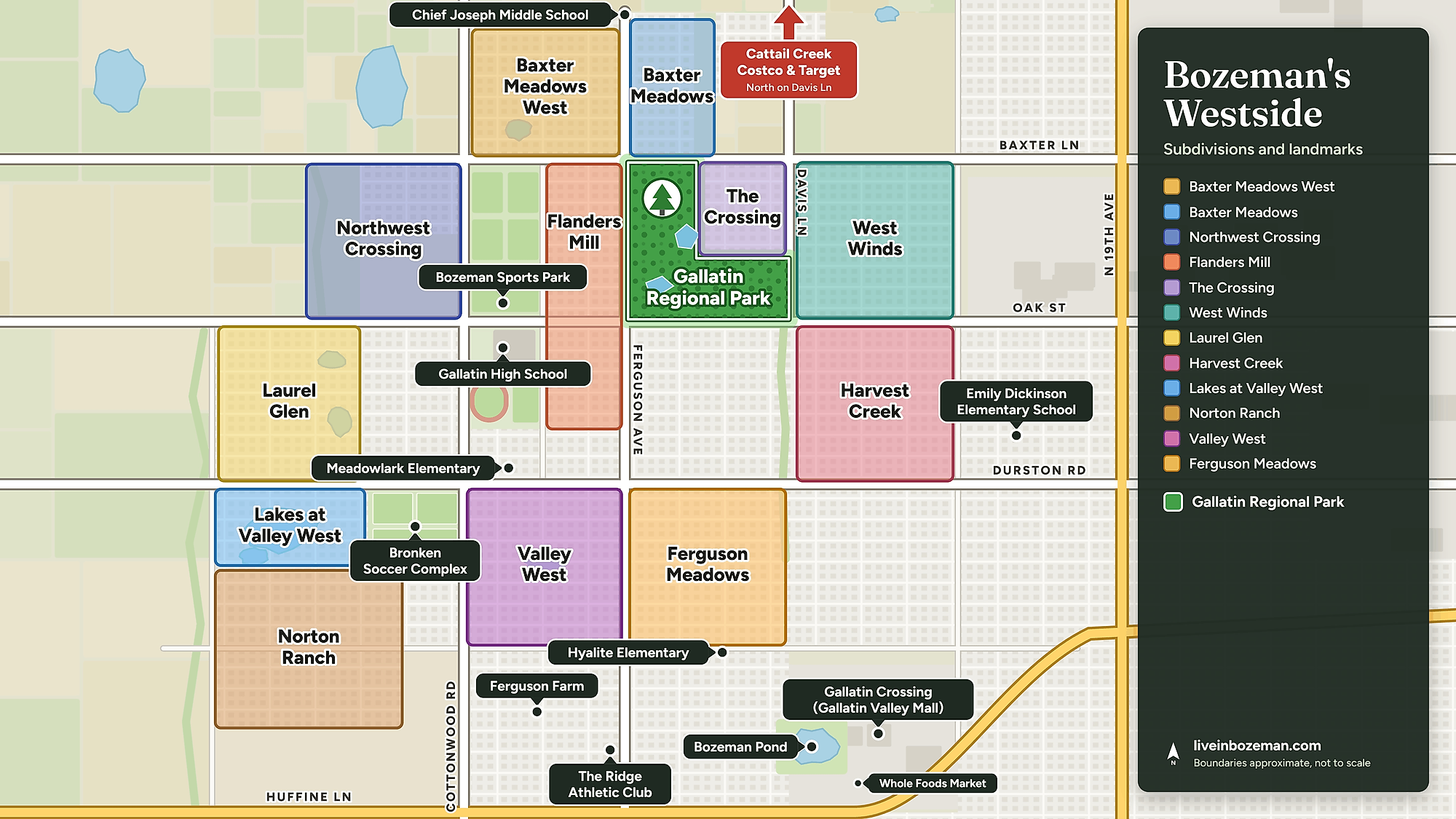
More than thirteen subdivisions make up the west side of Bozeman, and two things decide which of them hold value. How close you sit to Gallatin Regional Park, and where you land in the school corridor running through Meadowlark Elementary, Chief Joseph Middle School, and Gallatin High.
Those are the anchors. Everything else out here is finishes and personal taste. Two homes a few blocks apart can be priced almost identically, and one moves in under a week while the other sits all summer, every single time.
Below is the full tour, thirteen subdivisions in five groups, starting furthest from both anchors and working toward the neighborhoods sitting on top of them. Stay with the last section, because there’s a stack of new development already approved or filed with the city out past Cottonwood, and once you see where it’s headed, a couple of these look different than they do today.
Rather listen than read? I drive the whole west side on camera: The West Side of Bozeman, Neighborhood by Neighborhood.
The short version
Two anchors set value on the west side of Bozeman: proximity to Gallatin Regional Park and position in the Meadowlark, Chief Joseph, and Gallatin High corridor.
The Crossing, Flanders Mill, and Baxter Meadows West are the three neighborhoods holding both at full strength, which is why they cost what they cost.
Roughly 3,000 acres northwest of the current edge are moving through a city planning process right now, and none of it adds park frontage.
What are the best neighborhoods in west Bozeman?
The Crossing, Flanders Mill, and Baxter Meadows West hold the strongest combined position, since each sits against Gallatin Regional Park and inside the school corridor. Baxter Meadows and Harvest Creek deliver the school side for less. Northwest Crossing and Norton Ranch are where you buy new construction. Valley West, West Winds, and Ferguson Meadows are the realistic entry points onto the west side.
Group one: the neighborhoods that built their own reasons
Start along Durston and Ferguson where the west side began, because these went up before the park and the high school existed. They had to give people a reason to live there on their own.
Valley West was one of the first major subdivisions out here, and that history shows up in ways new construction can’t fake. A large pond sits at the center, with walking trails, a stream, and landscaping that took twenty years to look the way it does. It’s the most versatile neighborhood on this list, with condos, townhomes, and single family homes across a wide range of price points. You’re inside the school system and Meadowlark is close. The regional park is a drive or a bike ride rather than a walk. What that buys you is a way onto the west side without paying a custom home premium, plus mature trees on the day you move in rather than in 2045.
The Lakes at Valley West, just west of Cottonwood, does something nothing else on this side of town does, which is put water at the center of daily life. There’s a swim area, paths around the water, and a mix of custom and attached homes around the edges. It’s newer, so the landscaping hasn’t filled in the way Valley West has. It sits in the same school position at roughly the same distance from the park. You’re paying for the setting, and people drive across town just to walk dogs here. It’s the one I’d send somebody to see on a Saturday before deciding anything else.
West Winds, east down Baxter Lane, is one of the quieter entry points, overlooked because it has no signature feature. Single family homes, townhomes, condos, connected trails, and a position that keeps you within reach of the school corridor without park frontage attached. That’s the trade, and for a lot of buyers it’s the right one.
Ferguson Meadows, south toward Huffine, leans heavily toward attached homes, which makes it one of the more attainable addresses out here for a first purchase. You’re close to Huffine for errands and on the trail system, with real distance from both anchors. For most people this is a first step onto the west side, and the equity built here is usually what moves them into a neighborhood further down this list. There are a few single family homes, and they run smaller.
Group two: north of Durston, where the layout is the amenity
This group went a different direction. No pond or private lake is being sold to you. What you get instead is the city’s amenities close by, meaning the regional park, the schools, and the trail system, plus more thought put into how the neighborhood itself is laid out. Why does that second part matter? Because it’s what your street feels like on a Saturday.
Harvest Creek has something rare out here: architectural consistency. Single family homes only, built in Craftsman styles with HOA-enforced standards that keep the whole neighborhood looking like one person designed it on the same afternoon. Trails run through it. There are two large parks and a basketball court inside the subdivision, the regional park is under a mile away, and Chief Joseph is right there. What that adds up to is a park you can bike to without crossing anything serious, and a street that looks planned.
Laurel Glen, further west along Durston toward Laurel Parkway, is about as straightforward as it gets. Single family homes, parks, trail connections, solid school positioning, and the regional park a bike ride away rather than out the back gate. This one is for the buyer who has looked at eleven neighborhoods and wants to stop shopping.
Cattail Creek, northeast toward 19th, is the honest outlier. It sits on the north edge of town rather than the true west side, so if you’re picturing Gallatin High and the regional park, this one is minutes removed from both. What you get instead is the entire North 19th corridor a few minutes from your door: groceries, restaurants, gyms, and a mix of housing types. Put it on your list if that convenience is what your week needs, and go in knowing the two anchors aren’t outside.
What a listing price won’t tell you
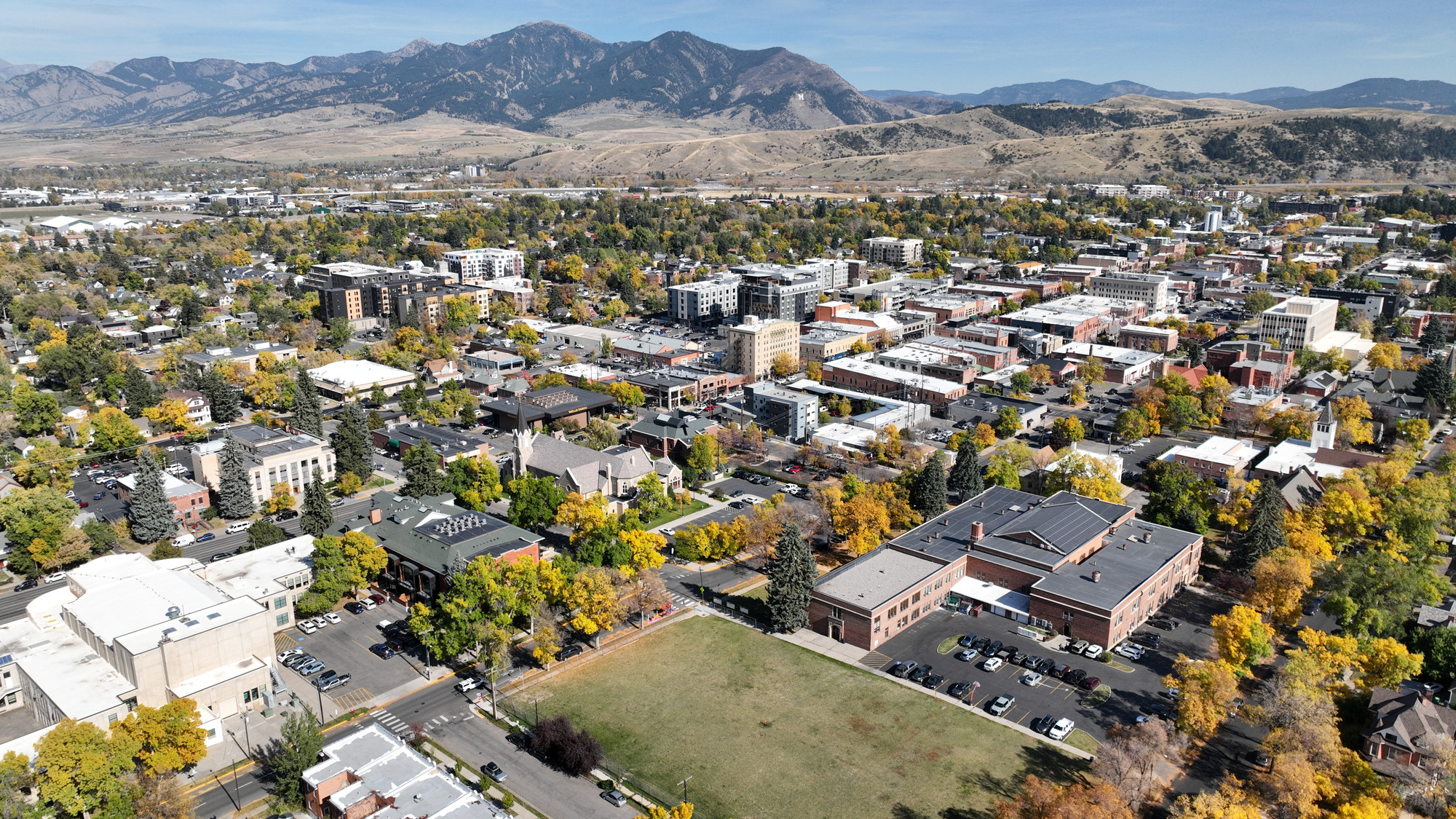
Before the neighborhoods sitting on the park itself, here’s something worth knowing if you’re new to the valley. Two homes out here can be listed at the same number and be completely different purchases. One is a walk from the regional park and close in on the schools people move here for. The other is six blocks away, and you can’t see any of that in the pictures.
So somebody looks at what the neighborhood sold for and assumes it applies to the house in front of them, and it usually doesn’t. Part of what the neighbor paid for was the walk to the park and the school they’re closest to, and there’s no way to add either one to a house after you own it.
It runs the other direction too, which is why a home with a beautiful kitchen six blocks out can go through three price drops while something plainer and closer goes under contract in a weekend. When you’re comparing two places at the same number out here, look at what’s around them before you start comparing kitchens. That’s worth more than anything else you’ll do on this side of town.
Group three: new construction
Northwest Crossing sits kitty-corner from Gallatin High at Oak and Cottonwood, and it’s the most ambitious thing happening on the west side. The master plan covers 160 acres with more than 700 planned residences, plus commercial space meant to become restaurants, retail, offices, and a grocery store woven into the neighborhood. Williams Homes is building the single family homes and townhomes with alley-loaded garages on a walkable street grid rather than the cul-de-sac pattern most of the valley was built on, and buildout runs toward the end of the decade.
It’s also the closest thing Bozeman has to a true production builder inside city limits, with a sales office and homes you can walk through today, which sounds ordinary until you go looking for another master-planned community like it. So what’s the catch on buying into something still being built around you? Gallatin High is already across the street and the regional park is a drive. The restaurants and offices arrive later, and you live through construction in between.
Norton Ranch, a few minutes southwest off Huffine near Bronken Sports Park, is in a different position entirely, because the builder is openly calling this the last leg of their development. There’s a community garden, a playground, a dog park, and trails, so recreation is built inside the neighborhood. You’re further from the school corridor than anything else in this group. When a developer tells you the runway is ending, that’s the thing I watch buyers act on too slowly, because once a final phase sells through, the only way in is a resale.
Group four: on the park
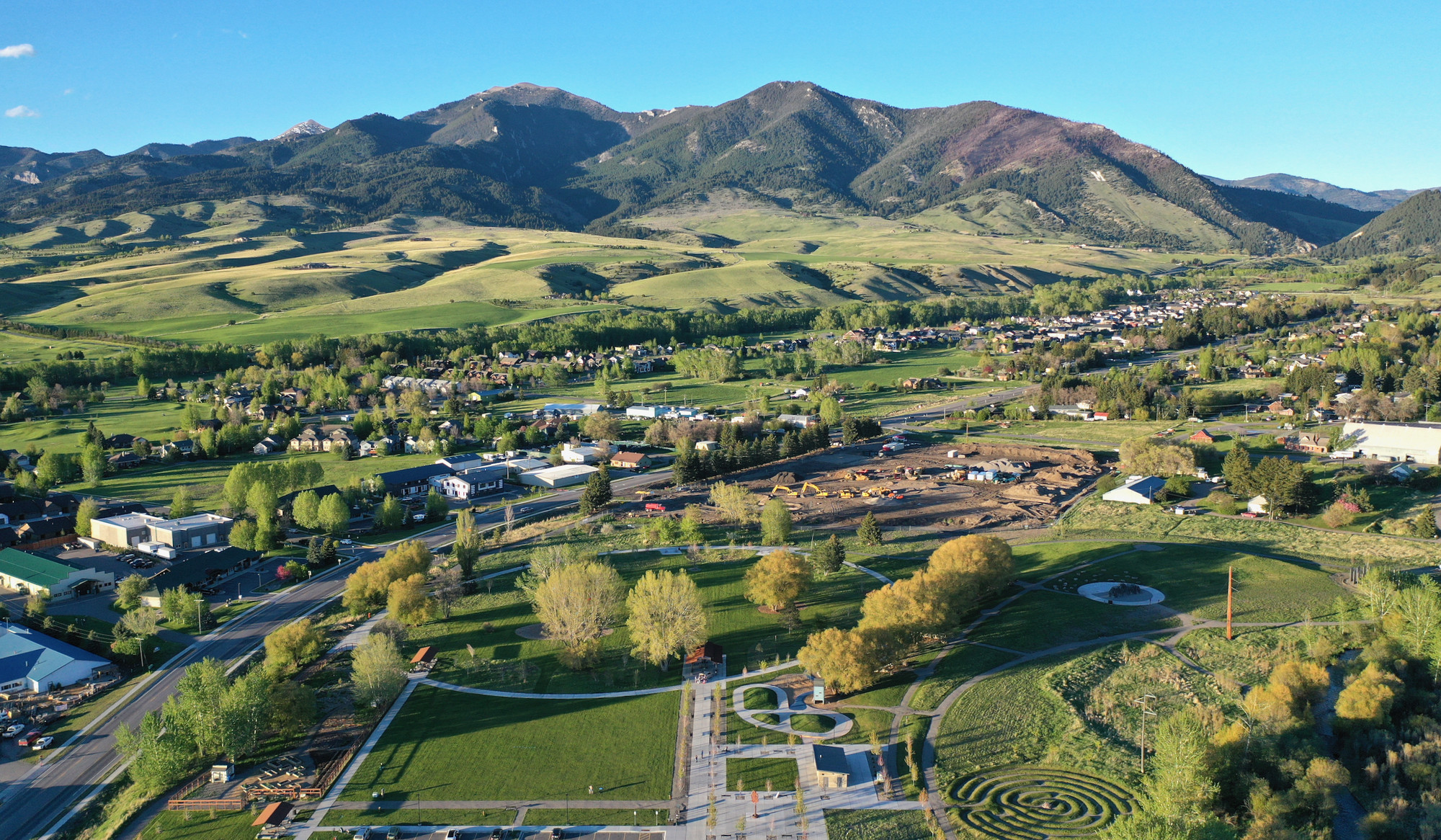
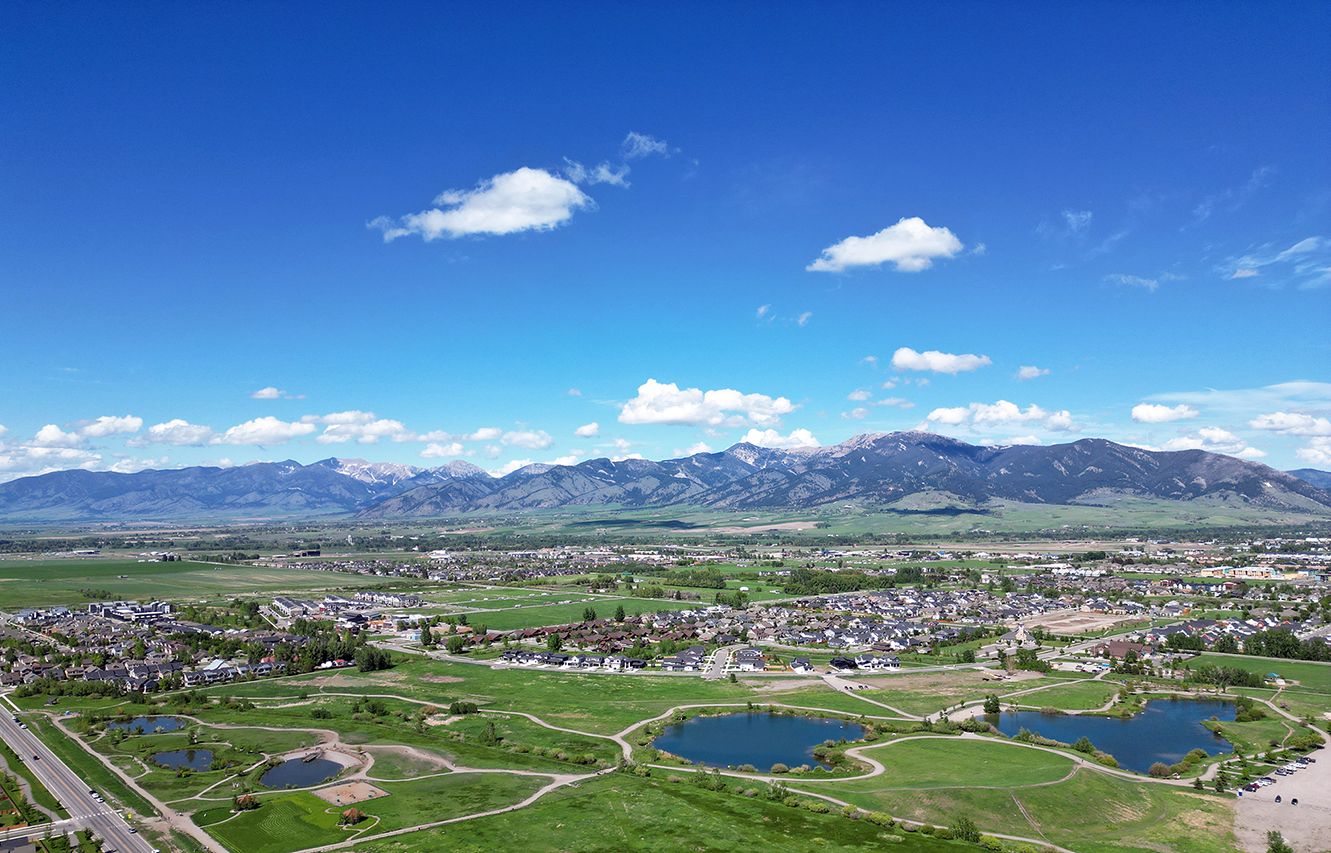
The Crossing is the easiest neighborhood on this list to explain. Nobody out here is closer to the regional park, because the park borders it on two sides. The trails, the ponds, the dinosaur playground, and the dog park all start where your backyard ends.
There’s a second thing happening here, which is that The Crossing has no room left to expand. Aside from a couple of lots not yet built on, what exists now is the final development. Supply like that sitting against park frontage nobody can replicate behaves very differently over ten years than a neighborhood adding a phase every spring.
Baxter Meadows, a block north and just west of the Target and Costco corridor, mixes single family and multifamily with trail connections, a large park inside the subdivision, and Chief Joseph essentially next door. That school position is the strongest thing about it, and it’s why this one holds up even in a slower market.
Move west across the same subdivision and Baxter Meadows West is a different conversation. Single family only, with lots running up around 18,000 square feet, which is large by any standard inside city limits and getting rarer every year. Trails connect straight across Baxter Lane into the regional park, and Meadowlark, Chief Joseph, and Gallatin High are all within close range, giving this one of the best combined positions in the whole tour. Nobody is platting lots that size inside the city again, and that’s the entire argument for this neighborhood. It’s also where resale takes care of itself, because a big lot in walking range of the park and three schools doesn’t stop being wanted when the market slows.
Group five: the complete package
Flanders Mill, just south across Baxter Lane, is the one people bring up most when they want everything at once. It’s a 137-acre master-planned neighborhood facing the regional park, with 36 acres given over to parks, streams, ponds, trails, and playgrounds. It also has protected viewshed corridors that lock in the Bridger sightlines, so nothing gets built into your view later.
Gallatin High is directly adjacent, and Meadowlark and Chief Joseph are walkable. Homes here are custom, so you’re not looking at the same three elevations down the whole street. Which of the two anchors does Flanders Mill give you? Both at once, which almost nothing else on the west side does, plus a rule against short-term rentals that keeps it an owner-occupied neighborhood rather than a rotating one.
What’s coming west of Cottonwood
Now the part I promised, because what’s coming changes how you read all of the above.
West of Cottonwood, two developments are working through the city that most buyers have never heard of. Diamond 8 covers roughly 80 acres straddling West Oak directly across Cottonwood from Northwest Crossing, and the Nollmeyer annexation adds about 40 more just south of it. Together that’s roughly 120 acres of west edge land coming into play, which is the next Northwest Crossing-sized thing forming, and it’s happening in the planning file rather than in the news. Laurel Meadows, about 45 acres on the Cottonwood corridor between Babcock and Durston, is already at final review, so approval there is close.
Then there’s the one nobody has priced in. The city is drafting the Northwest Bozeman Area Plan, covering roughly 3,000 acres in the northwest corner of its growth boundary. It’s tied to the proposed Gooch Hill Sanitary Sewer Lift Station, which is what would make development out there possible at all. City staff have been clear that most of that ground isn’t annexed yet, and that annexation is the property owners’ decision rather than the city’s. The plan has been through its first round of public engagement and is moving toward board work sessions and a refined draft. No housing number is attached to it.
What the growth does to the two anchors
So what does all of that do to the park and the schools? The park isn’t moving and it isn’t getting bigger. Every home added out west makes park frontage scarcer rather than more available, which is straightforwardly good for The Crossing, Flanders Mill, and Baxter Meadows West.
Schools are the piece that will shift. Put thousands of new rooftops northwest of the current edge and you eventually get boundary conversations and new school capacity, and until that gets built, the corridor we have now absorbs all of it. Add the city’s infrastructure work on the west side, including a new 27th Street connection between Baxter and Cattail, and the shape is clear enough. Growth is moving north and west, the two anchors aren’t moving with it, and everything already sitting on top of them gets harder to buy.
How to get thirteen down to two
Start with which anchor matters more in your actual week.
If the park is the priority, you’re looking at The Crossing, Flanders Mill, or Baxter Meadows West. Schools barely change that short list, which tells you why those three cost what they cost, and Baxter Meadows and Harvest Creek get you the school side for a little less. If a home nobody has lived in is the priority, that’s Northwest Crossing, where Gallatin High is already across the street, or Norton Ranch. And if the goal is getting onto the west side at all, start in Valley West, West Winds, Harvest Creek, or Ferguson Meadows and plan to move up.
Then run your top pick through both kinds of wealth. On the lifestyle side, ask which one fits how you spend a Tuesday, because that’s the part you live in. Then check it against your budget and ask what you can carry now and what still has room to grow. When a neighborhood lines up on both, that’s your list, and it’s usually one or two rather than thirteen. That’s the whole logic behind the Montana Move Method.
Most of what a home out here earns you gets decided the day you pick the neighborhood. On the west side it comes down to a park that can’t get any bigger and a school corridor everybody is trying to get inside of. If you’re weighing this side against the rest of town, start with our tour of the whole valley.
Prefer to watch?
Here’s the full drive, neighborhood by neighborhood.

If the video doesn’t load, you can watch it here on YouTube.
West side Bozeman: quick answers
What decides home values on the west side of Bozeman?
Two anchors decide it: proximity to Gallatin Regional Park, and position in the school corridor covering Meadowlark Elementary, Chief Joseph Middle School, and Gallatin High. West Bozeman homes a few blocks apart at the same price can perform completely differently on those two factors alone.
Which west Bozeman neighborhood is closest to Gallatin Regional Park?
In west Bozeman, The Crossing is closest, since Gallatin Regional Park borders the neighborhood on two sides and the trails, ponds, dog park, and dinosaur playground begin where the backyards end. Flanders Mill faces the park directly, and Baxter Meadows West connects to it by trail across Baxter Lane.
Where can you buy new construction in west Bozeman?
Northwest Crossing at Oak and Cottonwood is the largest new construction option, a 160-acre master plan with more than 700 planned residences built by Williams Homes, kitty-corner from Gallatin High. Norton Ranch off Huffine is in its final phase, so remaining inventory there is limited.
What is the most affordable way onto the west side of Bozeman?
Ferguson Meadows leans toward attached homes and is among the more attainable addresses in west Bozeman, with Valley West and West Winds also offering condos and townhomes at lower entry points. Buyers commonly build equity in one of these and move into a neighborhood closer to the park or schools later.
Which west Bozeman neighborhood has the largest lots?
Baxter Meadows West has single family lots running up around 18,000 square feet, which is large for anything inside Bozeman city limits and increasingly rare. Lots that size are no longer being platted inside the city, which is the core argument for that neighborhood.
Does Flanders Mill allow short-term rentals?
Flanders Mill, on the west side of Bozeman, has a rule against short-term rentals, which keeps it an owner-occupied neighborhood rather than a rotating one. It also carries protected viewshed corridors that preserve the Bridger sightlines from future construction.
What is the Northwest Bozeman Area Plan?
The Northwest Bozeman Area Plan is a City of Bozeman long-range planning effort covering roughly 3,000 acres in the northwest corner of the city’s growth boundary, connected to the proposed Gooch Hill Sanitary Sewer Lift Station. Most of that land is not annexed, and annexation is the property owners’ decision.
How will west side growth affect schools and the park?
Gallatin Regional Park cannot expand, so every home added northwest makes park frontage scarcer rather than more available. School boundaries are the piece likely to shift, since thousands of new rooftops eventually force boundary changes and new capacity, and the existing corridor absorbs the growth until that gets built.
Which two are you deciding between?
Tell me which anchor matters more in your week and I can usually narrow thirteen to two in a few minutes. Book a call with me and we’ll work through what your number carries in each of them.