
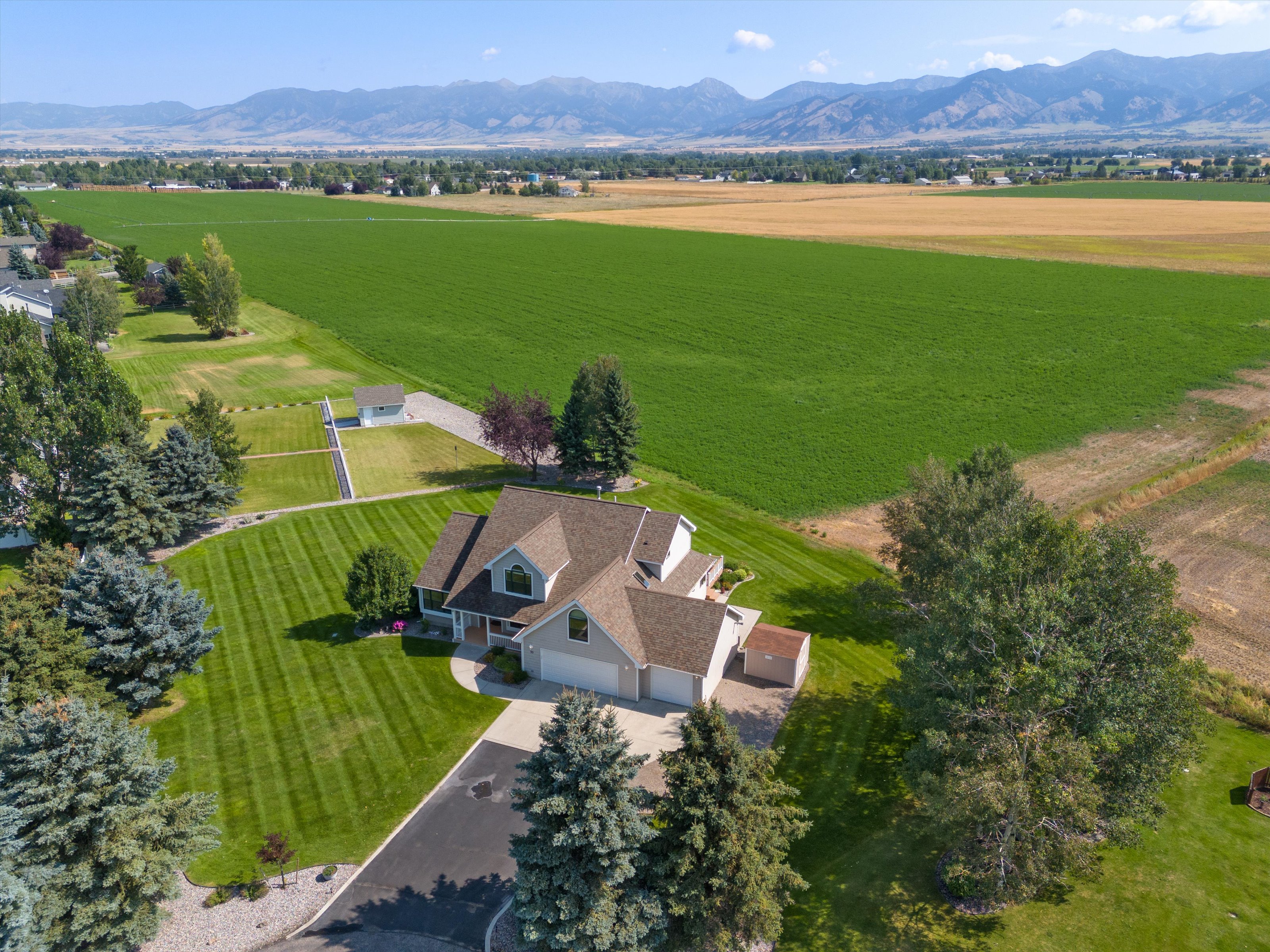
Nine hundred thousand dollars in Bozeman buys a house on about a 7,000 square foot lot. Close enough to hand your neighbor a coffee through the kitchen window. Twenty minutes out of town, that same money gets you almost five fenced acres and a shop big enough for the trailer, the camper, and whatever else you've been storing at a friend's place.
I had a client who grew up in Montana and wanted a place back home for her family, and every house we walked here sat on that same 7,000 square foot lot. She didn't buy in Bozeman, and I'll tell you where she landed. Below is the same $900,000 spent in seven markets around the Gallatin Valley, including the one where it doesn't buy a house at all.
Rather listen than read? I walk all seven on camera: What $900,000 Buys in 7 Gallatin Valley Towns.
The short version
Surrounding towns generally run 15 to 30% under Bozeman for a comparable home, and Belgrade is the closest you can get to Bozeman while still paying less.
Livingston delivers the most square footage of anywhere on this list, and the reason is the wind and Bozeman Pass, both of which are priced in.
Decide your acceptable drive time before anything else, because it eliminates more of this list than price ever will.
What does $900,000 buy in the Gallatin Valley?
Inside Bozeman city limits, $900,000 buys an average home on roughly a tenth of an acre. Ten minutes out in Belgrade it buys half an acre and a house large enough for an extended family, or close to five fenced acres with a shop on the rural roads nearby. Manhattan puts four bedrooms on an acre and a half, Three Forks buys a genuine horse property, Livingston buys the most square footage on the list, Ennis buys blue-ribbon river country, and Big Sky buys a condo.
Bozeman, the town everything else gets measured against
Bozeman has been one of the fastest-growing small cities in the country for a while, and that isn't an accident. Montana State anchors the economy, tech and healthcare keep expanding, the airport is the busiest in the state, and people keep relocating from California, Washington, Colorado, and Texas. Put that against a valley that can only build so fast, with the typical home here roughly two and a half times what it was a decade ago, and $900,000 buys an average house. That catches people off guard, because it doesn't make you a high roller here.
On the older end, picture something on the south side within walking distance of Main Street and the university, built in the 1930s, full of character, on a lot you could mow in about four minutes. You're paying for where it sits and for leaving the car in the driveway to walk downtown for dinner. For a certain buyer that's worth every penny.
Go new construction instead and almost the identical number puts you in a six-bedroom home on the west side with fresh finishes and more than twice the square footage, on roughly a sixth of an acre. West side subdivisions have anchored a lot of Bozeman's recent growth, so you're getting new construction in a pocket that's already established. What this money doesn't buy anywhere inside city limits is room to spread out, and plenty of people make that trade happily and never think about a real yard again.
Just past the city line: two different markets at the same price
Bozeman isn't only the neighborhoods inside the city limits. Step past the line and the surrounding area is a real market of its own, and at this budget it splits two ways depending on which direction you point the car.
Point it toward the growth end and there's a stretch of ground the planners call the Triangle, between Bozeman, Belgrade, and Four Corners. The county has designated it the main growth corridor, with thousands of new homes planned over the coming years. A newer four-bedroom on about a fifth of an acre along that emerging west and south edge puts your money where the valley is headed next, since Bozeman keeps pushing west while Belgrade pushes south and the ground between them fills in.
Turn around and head east toward the canyon and the same budget buys something completely different: real acreage with a smaller house on it. Land holds its value on that side because of terrain, access, and more than anything, conservation easements. Groups like the Gallatin Valley Land Trust have permanently protected thousands of acres around the city, so land close to town stays scarce whether the market is hot or not. The reality that comes with it is spotty cell service, your own road to maintain, your own garbage to haul, and the snow is yours too.
Two completely different areas at the same price point. The Triangle is a bet on where this valley expands next. East toward the canyon takes somebody who wants land badly enough to plow their own road every January.
Belgrade, ten minutes and 15 to 30% less
Belgrade has grown up alongside Bozeman and prices never climbed at the same rate. Across these surrounding towns you're generally seeing 15 to 30% under Bozeman for a similar home, and Belgrade is the closest you can get while still paying less. Part of that is simply that it hasn't caught up yet, and the growth is arriving: Bozeman Yellowstone International sits right here, and Belgrade anchors the south end of that Triangle corridor, so the expansion is headed straight at it.
This is where my client landed. She had walked Bozeman houses for weeks and kept hitting the same reality, then stood on a lot on the north side of Belgrade, half an acre, new construction, and I watched her do the math right there. Enough bedrooms that her kids and grandkids can all be in the house at once instead of split across town. A yard where everybody can be outside together, room to park the camper and the sleds. The airport less than ten minutes away, which matters more than people expect when family is flying in at different times through the year. At $900,000, that lot doesn't exist inside Bozeman city limits.
If the money side interests you more than the family side, there are new construction builds out here with a separate one-bedroom unit attached to the main house. That's rental income sitting inside the floor plan from day one, in a growing town, under Bozeman's median. You won't find that combination in Bozeman at this price.
And if land is what you want more than house, take the same budget onto the rural roads around Belgrade and up in the Springhill area. Out there this number finds close to five fenced acres, a three-bedroom home, and a shop around fifty by thirty with room for horses, trailers, and campers. In Bozeman that money bought about 7,000 square feet of lot. Ten minutes away it buys almost five acres and a building to park everything in.
.jpg)
Manhattan: everything sells on about an acre
Another ten minutes west is Manhattan, where nearly everything that sells sits on about an acre, and that single fact sets the prices. It's real small-town Montana, with deep Dutch farming roots in the Churchill and Amsterdam communities, one main intersection, and the Gallatin River close enough that some of the best fishing in the valley is right here.
Here's the part of the data that looks like a mistake at first. Manhattan's median home price runs closer to Bozeman's than makes sense for a town this size, so you have to look at what's underneath the house. What you're paying for is the land. At $900,000 that's four bedrooms on roughly an acre and a half, so you get elbow room, the river nearby, and a community that functions like one. What you trade is the commute and a very small local job market, with most people driving into Bozeman in the twenty to twenty-five minute range.
Three Forks: the most land per dollar
Ten more miles west the mountains pull back, you come out into open wheat fields, and that's Three Forks, where three rivers meet to form the headwaters of the Missouri. This is where $900,000 stops being a constraint at all, since the median here is the lowest we'll touch. In the ranch-style subdivisions northwest of town, this number buys a genuine horse property on real acreage.
Two catches, and you should know both before you start looking. Those large ranch-style subdivisions carry their own homeowners associations, with covenants, dues, and architectural guidelines, so what you're buying is a managed community with rules attached. That surprises people, and plenty of buyers prefer it, because it protects the look and the values around them. If you want cheaper ground with fewer rules, look at pockets like Ponderosa Pines and Clarkston northeast of town, and check the well, the power, and the road access before you fall in love with a price, because a lot of those parcels are still off-grid and bringing infrastructure in gets expensive fast.
Worth knowing: Three Forks sits farther out in the open valley, so winters generally run milder than in the towns tucked against the mountains. The rest is what you'd expect this far out, meaning a small local job market and a thirty-plus minute commute. You get the most land per dollar on this list, and it works if you're remote or your work is already out this direction.
Decide your drive time before anything else
Knowing the towns doesn't help you pick one. So before price, decide the drive, because it eliminates more of this list than any number will.
If you're going into Bozeman five days a week, that figure decides it for you ahead of everything else. Under twenty-five minutes each way and you'll stop noticing inside a month. Get to forty-five or more and it starts eating into the reason you moved out here, and you'll feel it every afternoon. If you work remotely, or your work is already in a specific town, the drive stops mattering and land becomes the thing you're actually shopping for. Answer that question first and the list gets much shorter.
Livingston: the most house for the money
Back through Bozeman and east over the pass, about half an hour out, you cross into Park County and drop into Livingston, where this budget buys more square footage than anywhere else on the list. Something like 3,500 square feet in a four-bedroom home.
The feeling there is its own thing entirely. An old railroad town turned artsy, quirky and walkable, with the Yellowstone running right through it, the Shields Valley opening north and Paradise Valley opening south toward Yellowstone's north entrance about an hour down the road.
So why is the house so much bigger for the same price? Two reasons, and they're the same two the market has priced in. Livingston is known for its wind, especially in winter, and it can run for days at a stretch. Anybody who lives there will tell you the same. Then there's the pass itself, because your commute into Bozeman goes over Bozeman Pass, and in a hard winter that drive slows down or the pass closes outright. If neither is a dealbreaker, you're getting space, real character, and a downtown for well under what Bozeman costs.
Ennis: blue-ribbon water and big country
An hour southwest of Bozeman on two lanes the whole way is Ennis, and out there the river is the reason people buy. This is fly fishing country in the truest sense, with the blue-ribbon Madison running through town, mountains in every direction, and a small Old West downtown that's genuinely charming.
Prices run higher than you'd guess for a town this size, because river frontage, water rights, and acreage carry almost all of the value. At our number you land a three-bedroom home around 3,300 square feet with the kind of country people drive hours to see. It draws retirees, second-home buyers, and anybody whose work travels with them. The reality check is distance, since jobs and shopping are limited and an hour each way isn't something most people will do daily. You move to Ennis because the place itself is the whole reason.
Big Sky: where $900,000 buys a condo
Head south up Gallatin Canyon and you arrive in Big Sky, where this whole exercise falls apart, because a single family home there starts in the millions and the median sits several times over our budget. What $900,000 reaches is a condo, and that's roughly the ceiling.
Two areas are in play at this price. Mountain Village sits high near the slopes, where this number gets a small one-bedroom near the resort, about the most affordable slopeside condo there is, and even that's a stretch. Drop down into Meadow Village by the golf course and it can reach a renovated three-bedroom, one-level condo with a big deck and Lone Peak staring back at you, which is a genuinely nice place.
This is the sharpest contrast on the list, since the same price that bought five fenced acres and a shop ten minutes outside Bozeman barely opens a door here, and the market climbs fast from there. Almost nobody commutes from Big Sky to a desk job in Bozeman, so what you're buying is a second home or an investment.
All seven side by side
Bozeman: an average house on about a tenth of an acre, or new construction with almost no land. Belgrade: half an acre and a house big enough to hold the whole family, or five acres and a shop just outside. Manhattan: four bedrooms on an acre and a half. Three Forks: a horse property on real acreage for the least money on the list. Livingston: the biggest house, over the pass. Ennis: big country and blue-ribbon fishing. Big Sky: an entry-level condo that will never be a single family home.
So which town is yours?
Here's what I'd tell you across the table. The house matters less in this decision than people expect, and the town matters far more, because the town sets the ceiling on everything else. It decides what your money buys, how your mornings look, and where the place is positioned ten years from now.
So I look at two things at once with everybody I work with, and a good decision needs both working together. There's the money side, which means putting your budget where it's positioned to grow, and around here that's the path of growth near Belgrade and Bozeman's west side, and it's also why acreage close to town holds value as conservation and terrain keep it scarce. Then there's the life side, which is the space you need and the view out the window, because that decides what kind of days you'll be having. When those two line up on the same town, that's your answer, and most people recognize it once they start looking. Working both at once is the entire idea behind the Montana Move Method.
My client is the real-life version. She had a strict budget, we started in Bozeman, and what changed was which town she was looking in. That same price bought her half an acre, a house her whole family fits inside, and under ten minutes to the airport. For the individual communities, work through our Bozeman subdivisions and neighborhoods guide.
Prefer to watch?
Here's all seven towns on camera, stop by stop.
If the video doesn't load, you can watch it here on YouTube.
Buying around Bozeman: quick answers
What does $900,000 buy in Bozeman?
Inside Bozeman city limits, $900,000 buys an average home on roughly a tenth of an acre, either an older character home on the south side within walking distance of Main Street, or a larger new construction home on the west side on about a sixth of an acre. It does not buy room to spread out anywhere inside the city.
How much cheaper are the towns around Bozeman?
Towns surrounding Bozeman generally run 15 to 30% under Bozeman prices for a comparable home, with Belgrade the closest you can get to Bozeman while still paying less. Three Forks carries the lowest median of any town in the Gallatin Valley.
What is the Triangle in the Gallatin Valley?
The Triangle is the stretch of ground between Bozeman, Belgrade, and Four Corners that Gallatin County has designated as its main growth corridor, with thousands of new homes planned. Bozeman keeps expanding west while Belgrade expands south, and the ground between them fills in.
How far should you live from Bozeman?
For a Bozeman commute, under twenty-five minutes each way and most people stop noticing within a month, while forty-five minutes or more starts undermining the reason for moving out of town in the first place. Decide your acceptable drive time before price, since it eliminates more options than any budget will.
Why are Livingston homes bigger for the money?
Livingston delivers more square footage per dollar than anywhere in the area because two things are priced into that market: the wind, which is well known and can run for days in winter, and the commute over Bozeman Pass, which slows or closes in a hard winter.
Can you buy a house in Big Sky for under a million?
Single family homes in Big Sky start in the millions, so $900,000 reaches a condo and little else. Mountain Village at that price means a small one-bedroom near the slopes, while Meadow Village can reach a renovated three-bedroom on one level.
Where can you buy acreage near Bozeman?
The rural roads around Belgrade and the Springhill area can deliver close to five fenced acres with a home and a shop at this price point, and Three Forks offers the most land per dollar in the Gallatin Valley. East of Bozeman toward the canyon, acreage stays scarce because of conservation easements and terrain.
Do Three Forks subdivisions have HOAs?
The large ranch-style subdivisions northwest of Three Forks carry homeowners associations with covenants, dues, and architectural guidelines. Pockets northeast of town such as Ponderosa Pines and Clarkston have fewer rules and cheaper ground, and many of those parcels are still off-grid.
Want to run your number against all seven?
Your number probably isn't $900,000, and the exercise works the same at any figure. Book a call with me and tell me your budget and your acceptable drive time. Those two answers usually cut this list down to two towns in about ten minutes.
Keep reading
Posted by Chase Heiland onEnjoy this blog post? Click here to subscribe for updates
Leave A Comment